

.svg)
.svg)
Residential Tenancy Agreement
 PDF and
 Word
Word
This residential tenancy template Australia is designed specifically for Australian landlords, property managers, and tenants who rent various types of residential properties, including houses, houseboats, apartments, units, etc.
Reviews

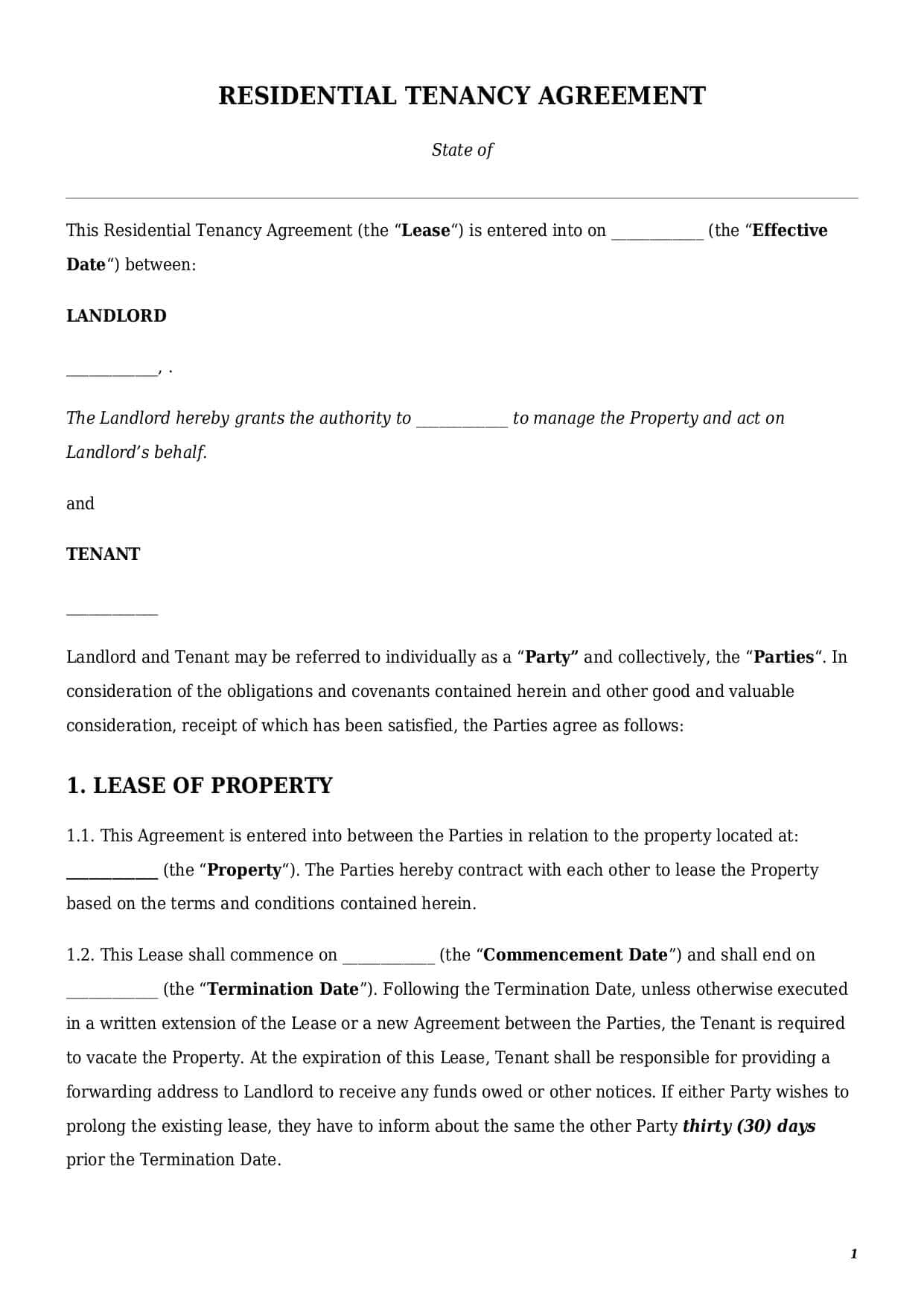
What is a residential tenancy agreement?
A residential tenancy agreement is a binding legal document that formalises the relationship between a landlord and a tenant. The contract sets up a solid framework that defines mutual parties’ obligations, property description, duration of the tenancy, rules for termination and dispute resolution and many more.
The document’s primary purpose is to protect the interests of both landlords and tenants, ensuring clarity on matters such as rent payments, property maintenance, and compliance with applicable state and territory tenancy laws.
This simple residential tenancy agreement template Australia can be used for renting different types of residential properties, including houseboats, apartments, units, houses, rooms and villas.
Who should use this residential tenancy agreement template?
A professionally drafted tenancy agreement form template can be helpful for:
- property investors looking for opportunities to maximise their rental income;
- private landlords renting out their property for the first time;
- real estate agencies helping tenants to find a property of their dream;
- property management companies managing rental properties on behalf of clients;
- tenants looking for a reliable template to protect their tenancy rights.
What should be included in this residential tenancy agreement Australia?
A solid and well-drafted sample of a residential tenancy agreement in Australia must include the following key elements:
Parties
The parties in a residential tenancy agreement form are a landlord and a tenant. A landlord, also referred to as a lessor or renter, is a property owner who wants to rent out the property. A tenant or lessee is an individual, group of individuals, or family who wants to rent a residential property to live in.
The text of every rental lease agreement sample must include:
- full name of each party;
- contact mailing address; and
- contact email.
Description of Property
Another important element for a standard form residential tenancy agreement is inclusion of a property description such as:
- property’s type, for example, house, houseboat;
- property’s size (in sq. mt);
- property’s location.
A landlord is obliged to provide a property that matches the description in the original residential tenancy agreement.
Lease Type and Duration
Residential tenancy in Australia could be of two types – periodic and fixed. Therefore, the text of the contract should clearly state the commencement date of the lease and its termination date (for a fixed tenancy only).
Rental Payments
Every tenancy agreement form template should define how much, when and how lease payments should be made. In Australia it is common to fix a weekly rental payment. It is mandatory to include all acceptable payment methods a tenant can use to make payments under the contract.
Failure to make a rental payment on time is a serious breach of a residential tenancy that allows a landlord to request termination of a contract.
Additional Charges
Paying rental payments is not the only expense a tenant shall incur during the tenancy. Parties have to split the costs for utilities, such as water supply, electricity, gas and other expenses.
Security bond
Every residential lease agreement should provide information about the security bond. This is a sum of money, separate from regular rental payments, that is being paid on the date of signing a tenancy agreement. The purpose of a security bond is to protect a landlord’s property against damage.
It is important to note that most states do not allow the use of a security bond to cover the last weeks or months of rent. Depending on a state or territory, a security bond should be lodged to a special escrow account.
Applicable law
A standard form residential tenancy agreement must define applicable laws. This is a law of a state or territory where a leased property is located. For this type of contract, parties cannot select a state or territory law of their choice, unlike with a service agreement or other types of contracts.
For example, in the case of a tenancy agreement NSW (New South Wales), the state-specific legislation shall apply, including the Residential Tenancies Regulation 2019 and Residential Tenancies Act 2010.
State and Territory Requirements for a Residential Tenancy Agreement
Despite significant similarities between Australian state and territory tenancy laws, there are legal specifics for each region.
New South Wales
Creation of a tenancy agreement Australia NSW is subject to the following additional conditions:
- – A landlord is required to give a signed copy of the tenancy agreement not later than the day a tenant moves in.
- – A security bond must be lodged with NSW Fair Trading.
- – A separate condition report of a leased property should be provided to a tenant prior to signing this agreement.
- – An increase in rent can be made not more than once in a 12-month period, provided a 60-day prior written notice is given to a tenant;
- – In case the apartment is being leased, a landlord must provide a tenant with a copy of applicable shared property ownership (Strata) bylaws;
- – A landlord shall immediately notify a tenant if a property becomes a risk for a tenant’s health or safety.
- – A landlord cannot publish photos of a property containing images of a tenant’s personal belongings.
- – A landlord must immediately notice if a lease property contains a loose-fill asbestos insulation.
Queensland
A tenancy agreement form in Queensland should include the following additional provisions:
- – An increase in rent can be made only upon serving a prior 2 months’ notice;
- – A document must specify if a tenant should cover full fees for water usage, water supply charges or both;
Victoria
For a simple residential tenancy agreement template Victoria, parties must include certain additional clauses below:
- – A security bond amount cannot be more than 1 month’s rent. A security bond should be lodged with the Residential Tenancies Bond Authority.
- – A landlord is obliged to provide a property condition report before the date a tenant moves into the property.
- – An increase in rent can only be made by sending a 90-day prior notice to a tenant;
- – In case the property has a swimming pool, a landlord must ensure that the pool barrier is in good repair.
- – A tenant should use professional cleaning for the property upon termination of the lease.
Tasmania
A tenancy agreement contract template for Tasmania should incorporate the clauses below:
- – A landlord has to supply a tenant with a detailed property condition report prior to signing this agreement.
- – A security bond should be held with the Rental Deposit Authority. Upon termination of the lease, a bond must be returned within 3 days after the termination.
- – A tenant can end the lease only upon serving a landlord a prior 14 days’ notice, even if there is a breach of the lease by a landlord;
- – A landlord must ensure that property meets minimum requirements, including working bathrooms and toilets, safe and sufficient electricity, adequate ventilation, etc.
South Australia
To create a periodic or fixed-term residential tenancy agreement South Australia, make sure to include the following conditions:
- – A rental property should meet minimum standards as provided by the Housing Improvement Act 2016.
- – A document should define if a tenant must cover full water usage, water supply charges or both.
- – A lease can be terminated by the South Australian Civil and Administrative Tribunal in case it causes undue hardship for either or both parties.
Western Australia
To create a solid tenancy agreement form WA (Western Australia), inclusion of the elements below is a must:
- – A security bond amount cannot exceed the sum of 4 weeks’ rent. The security bond should be kept with the bond administrator.
- – A landlord must supply a tenant with a detailed property condition report on or before the date of signing this agreement.
- – A landlord can increase the rent amount only upon providing a prior 60 days’ notice.
- – If the leased property is connected to the water services, the document must define the exact percentage of the water consumption bills a tenant should cover monthly.
- – If a tenant is allowed to keep pets in the property, an additional pet bond in the amount of AUD 260 should be paid on top to cover costs of fumigation.
Australian Capital Territory
For a tenancy agreement contract template in the Australian Capital Territory, inclusion of the elements below is essential:
- – A security bond should be deposited with the Office of Rental Bonds. The sum should not exceed 4 weeks’ rent.
- – If the apartment is being leased, a landlord must provide a tenant with a copy of the owner’s corporation’s rules before the start of the tenancy.
- – A landlord must provide a tenant with a detailed property condition report on the date of signing this agreement.
Northern Territory
In the Northern Territory, the creation of a tenancy agreement form template is not subject to any additional criteria that differ from general rules applicable to residential tenancy in Australia.
How to customise a residential tenancy agreement template with FasterDraft?
To get a fully customisable document template, follow a few easy steps below:
- Click the “Create Document” button.
- Answer simple questions in the form.
- Select a format – residential tenancy agreement template Australia PDF or Word.
- E-sign document.
- Make a payment.
The document is available for instant download immediately after the purchase.
Table of content
Frequently Asked Questions (FAQ)
-
1. Do I need a written tenancy agreement in Australia?
A tenancy agreement contract is a written document that records the main conditions of the lease, including lease payments, security bond amount, duration of the lease, termination rules and so on. In case of a dispute between the parties, it is hard to prove the initial parties’ arrangement without a solid legal proof.
Therefore, most Australians choose to have a written residential tenancy agreement.
-
2. Can I use this template in all Australian states?
Yes, this tenancy agreement template can be used to lease various types of residential premises located at:
- New South Wales;
- Queensland;
- Victoria;
- Tasmania;
- South Australia;
- Western Australia;
- Australian Capital Territory; and
- Northern Territory.
Upon the relevant state being selected, the document template is customised in compliance with applicable legislation of a selected state or territory.
-
3. What is the difference between a tenancy agreement and a short-term rental agreement?
A residential tenancy agreement is being used for a periodic or fixed tenancy concluded for a long period of time, such as 1 year or more. Contrary to that, a short-term rental agreement is being used for short-term rentals and is common for vacation homes, Airbnb properties and holiday listings.
-
4. What is the difference between residential tenancy and commercial lease agreements?
The main difference between those two documents lies in the purpose for which the property is being used. Under a standard form residential tenancy agreement, a property is being rented for residential purposes.
In other words, a tenant needs the property to live in. On the other hand, under a commercial lease, the property is being used for a business, including a warehouse, retail shops, offices, restaurants, etc.
-
5. What are the requirements for the house rental lease agreement?
To create a basic house rental agreement, parties must include the following information:
description of the house, including location, number of bedrooms and bathrooms, number of floors;
- detailed description of additional areas, if any, such as garden, swimming pool;
- amount of rental payments;
- security bond amount;
- grounds for termination;
- duties of a landlord and a tenant;
- maintenance and repair clause.