
.svg)
 United Kingdom
.svg) USA
USA

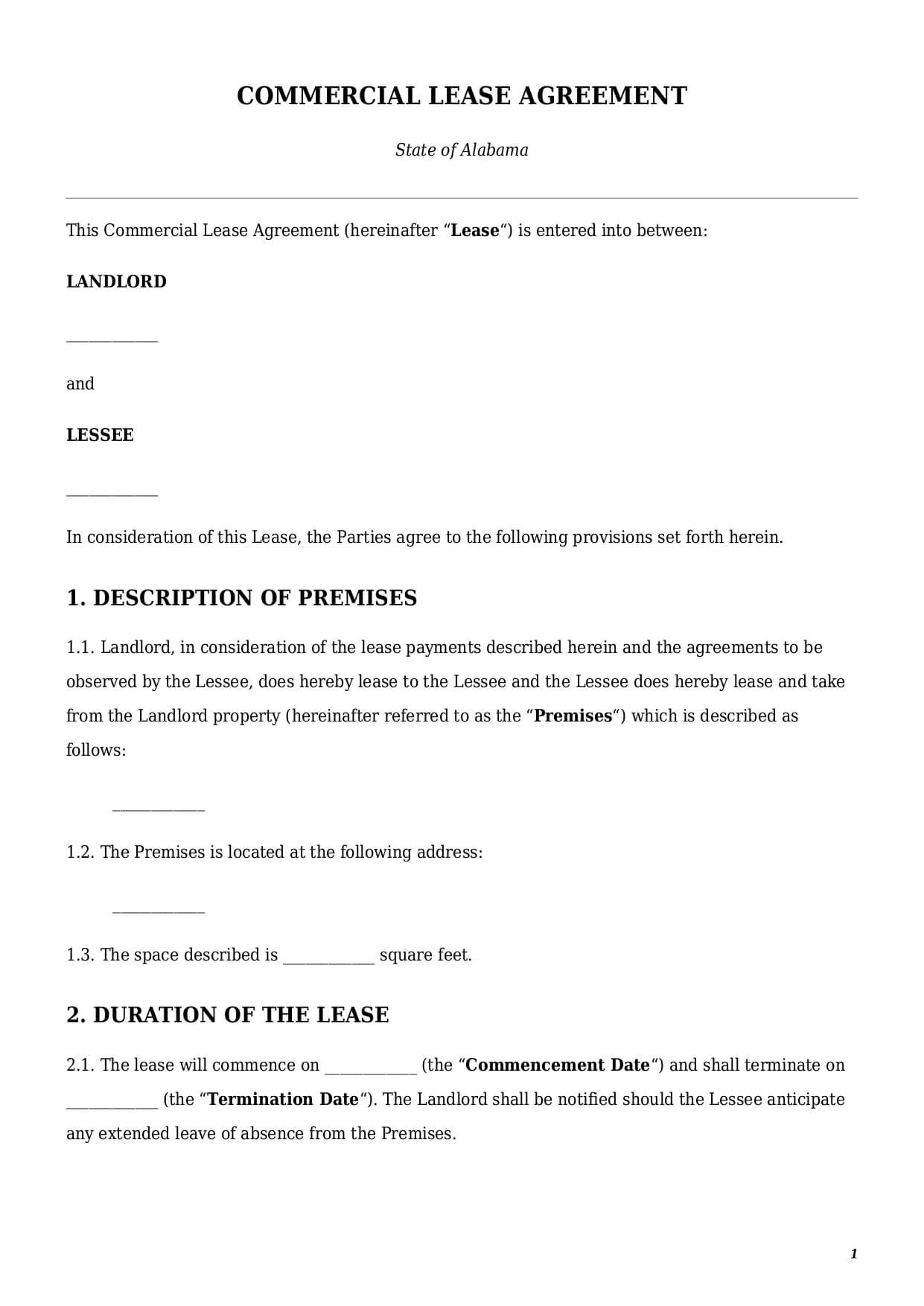
What is a commercial lease agreement in Australia?
A commercial lease agreement is a legally binding contract between an owner of commercial property and a tenant who wants to rent it out for doing business. This contract helps to outline a roadmap for leasing relations between the parties, as well as to ensure clarity and compliance with local retail tenancy and property acts.
This commercial property lease agreement defines the lease duration, payment terms, rights and obligations for the parties involved, duration and termination, applicable law and other important considerations.
The parties involved in a commercial lease agreement are the landlord and the tenant. A landlord is usually a property owner or a property management company, while a tenant is a company or a business seeking to lease the premises.
When should you use this commercial lease agreement template?
Australian businesses or startups can use this commercial lease agreement template when leasing:
- a shop, bar or restaurant;
- officer spaces;
- warehouse or other industrial property;
- mixed-use property, etc.
What to include in an Australian Commercial Lease Agreement Template?
If you want to draft an Australia commercial lease agreement sample from scratch, you should first review relevant state or territory legislation. This includes retail tenancy laws and real property acts. As a rule of thumb, state-by-state legislation in Australia may slightly differ, particularly in relation to the amount of security deposit required to start the lease, grounds for termination of a commercial lease agreement, etc.
Below is a summary of all important tips you should discuss with your future tenant or landlord before signing a final document.
Get to Know the Leased Property
Even if it sounds obvious, make sure you have a chance to properly inspect the commercial premises before entering a commercial premises lease agreement. Look for any visible or hidden defects you can find in the property. It is vital to accurately reflect the actual property’s condition before the lease starts. First, it prevents many potential disputes in the future. Second, you won’t be liable for pre-existing damage.
All in all, the text of a commercial premises lease agreement shall summarise:
- a property’s conditions;
- brief property’s description, including square footage; and
- property’s location.
Discuss Permitted Use of Property
Businesses enter a lease agreement contract for commercial property to get new premises for doing their business. Usually landlords tend to limit the usage of a commercial property to certain specific businesses and purposes. It means that if your lease states the property could be used as a sports bar only, then making a small grocery shop instead may unintentionally violate provisions of the lease.
Under most Australian retail tenancy laws, subleasing is generally not permitted unless expressly allowed in the lease. Thus, if your commercial premises lease agreement states no sublease, any violation of this rule will invoke the contract’s termination.
Term of the Lease
One of the key elements for every commercial lease agreement Australia template is the duration of a lease. It defines the period of time within which the tenant has a right to occupy the leased property and use it according to the agreed purpose. The state and territory laws provide a minimum duration of the lease for certain types of commercial properties. For instance, under the Retail Leases Act 2003 Victoria, the minimum required duration of the retail shopping lease shall be at least 5 years.
Once the term expires, the tenant must vacate the premises. There is one important tip we recommend: always include it in commercial business lease agreements. Think about what shall happen once a tenant refuses to vacate the premises. In that case, the text of the lease agreement must include a clause that converts such an expired lease into a month-to-month tenancy. Commonly, the lease converts to a month-to-month tenancy, allowing the landlord to continue receiving rent while retaining flexibility.
Know your rights
Once a tenant takes possession of the property, they shall have:
- the right of uninterrupted access;
- the right to use the property according to its purpose;
- the right to get a repair of a property, etc.
At the same time, landlords retain also certain rights, including:
- the right to inspect the leased premises from time to time;
- the right to carry out the repairs on the property;
- the right to show the property to prospective purchasers or tenants, etc.
The present commercial tenant lease agreement represents a fair balance of rights and obligations for both parties.
Define Rent Payment Structure
Another important step in creating a commercial property lease agreement sample is to define clear payment terms. As practice shows, most disputes between landlords and tenants arise because of ambiguity in payment provisions.
Thus, the parties must discuss the following:
- type of payment (e.g., monthly rent, annual rent, weekly rent);
- taxes (if GST is included or not)
- frequency of payment (e.g., monthly or weekly);
- acceptable payment methods;
- annual increase of rent (if needed);
- late fees for not paying rent on time (usually between 1 and 5%, but this clause is optional).
Governing Law
The last crucial element for every commercial business lease agreement is to define the state or territory law that shall apply to this agreement. Well, here parties do not have that much choice. In practice, the law of the state or territory where the property is located will apply.
For instance, if a commercial premise is located in Tasmania, it means that the laws of the state of Tasmania shall govern this agreement.
Depending on the applicable state law, the amount of stamp duty parties have to pay upon the conclusion of the lease also differs.
Why should you use this template for Australian commercial leases?
This commercial property lease agreement sample is ideal for small or medium-sized businesses, startups or property owners in Australia. Below are five key reasons to use it:
- complies with Australian states’ and territories’ retail tenancy and property legislation;
- drafted in clear, plain English;
- incorporates best practices for commercial leases in Australia;
- uses terminology and structure that are commonly applied in Australian business leases;
- created by real layers, not AI-generated.
Who shall use this commercial business lease agreement template?
Having a solid and compliant Australian commercial property lease agreement template is the ideal solution for:
- Landlords who wants to rent out unfurnished commercial space as a source of rental income and need a property structured agreement.
- Property managers who search for a standard commercial real estate lease agreement template they can rely on for regular use across different properties and tenants.
- Tenants who need a sample commercial lease agreement that duly protects the tenant’s rights.
- Small business owners who want to secure a commercial space and need a well-drafted commercial space lease agreement that supports long-term business operations.
- Startups who need a solid legal framework to establish their business and operate from commercial premises in Australia.
Download Your Commercial Lease Agreement Template Today
To download your customised legal document template follow a few steps below:
- Click the “Create Document” button.
- Answer simple questions in the questionnaire.
- Select a template’s format – commercial lease agreement PDF or Word.
- Make a payment.
- Download the template and get instant access to your customised document.