
.svg)
 United Kingdom
.svg) Australia
Australia

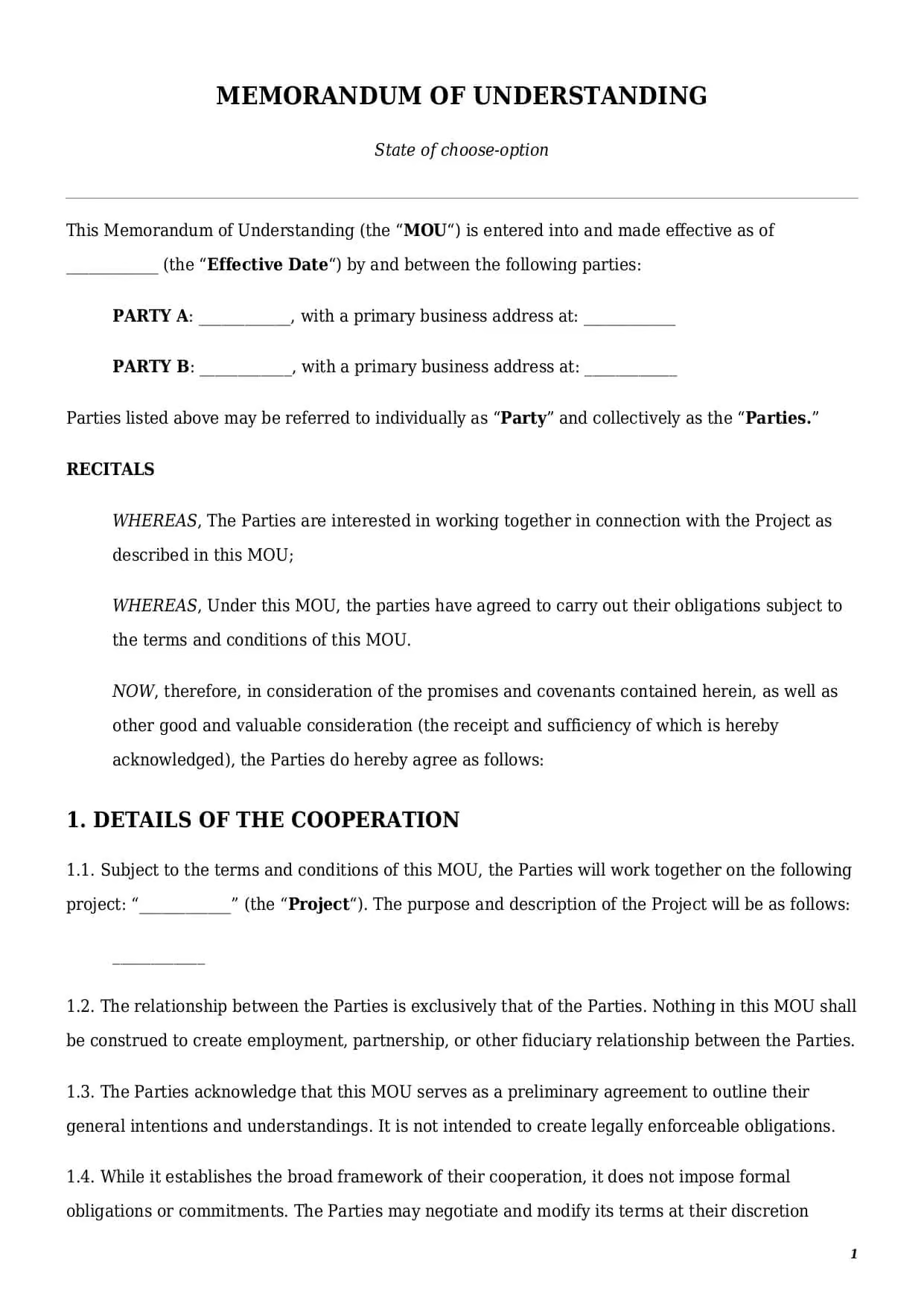
What is a memorandum of understanding template?
A sample memorandum of understanding is a preliminary non-binding document that outlines the mutual intentions, roles, and expectations of two or more parties before entering into a formal, legally binding agreement. This type of document is normally being used to record intentions for possible cooperation, collaboration, or future business transactions between two or more parties.
All in all, a typical memorandum of understanding format establishes a simple framework for cooperation between the parties, their mutual rights, purpose, and grounds for the termination of cooperation. The parties involved are startups, organizations, businesses, and individuals who wish to start cooperating together for various profitable and nonprofit goals.
Who shall use this memorandum of understanding?
This memorandum of understanding sample format is suitable for use by:
- Businesses and commercial entities that want to explore possibilities of cooperation with each other.
- Nonprofit organizations and NGOs that need to establish a partnership for achieving common goals and missions.
- Startups and entrepreneurs who want to test possibilities of collaboration frameworks with potential partners, etc.
What to include in a memorandum of understanding template?
Neither federal nor state laws define a memorandum of understanding agreement format. Since the document is not legally binding itself, there is no essential list of mandatory clauses it must contain to be legally valid. On the other hand, inclusion of certain provisions is crucial to ensure a document’s clarity. Finally, if parties wish to cooperate in the future, the present document may become a solid legal foundation for future projects. Thus, clarity of its wording and provisions is a must.
Below, we made a short list of clauses a solid (MOU) memorandum of understanding example shall include.
Parties Involved
This is the list of individuals, entities, or organizations who sign the document. The text of a document must reflect their full name, mailing address or business registered address, as well as contact details like email or phone number.
A memorandum of understanding agreement format can engage an unlimited number of individuals. Unlike with real contracts, signing a memorandum of understanding does not require any special skills, knowledge, license, or other requirements.
Once the document is complete, all parties involved must sign this document. In the case of a memorandum of understanding, signing a document does not have any legal consequences. However, it is an official gesture to confirm each party’s acknowledgment of the provisions of a document.
Purpose of Cooperation
This agreement memorandum of understanding sample shall define the name of a project or mission the parties want to achieve. On top of that, the text of a final document shall also reflect the main purpose of such a cooperation or goals to be pursued.
Inclusion of each party’s obligations is another essential element that the template memorandum of understanding usually outlines. Defining obligations and duties of each party does not make them obligatory. However, it could add additional clarity for everyone by knowing what is expected from either of the parties involved.
Confidentiality
Another puzzle of a sample memorandum of understanding is the inclusion of a confidentiality clause. This section is about the protection of confidential information of each party during the process of mutual cooperation.
Confidential information may include any financial, business, accounting, or other type of sensitive data that belongs to either party. It is also possible to sign a separate confidentiality agreement in addition to the present document.
Termination
Another important section for every memorandum of understanding (MOU) template is the duration of a project. The first step is to determine when the cooperation shall commence. This could be the date of signing this agreement or any other date.
Usually the memorandum of understanding expires upon signing another binding legal document like a joint venture agreement, services contract, partnership agreement, etc. Almost all samples of memorandum of understanding define a right of each party to end the cooperation anytime by sending a prior written notice to another party. The notice period could have any duration—from several weeks to several days.
MOU vs. Joint Venture Agreement
A sample memorandum of understanding (MOU) could remind them of a joint venture agreement. Indeed, both parties are aimed at cooperating together to achieve certain goals. However, there are certain legal differences between those two documents.
First, a joint venture agreement (JV) is legally binding, while a sample of a memorandum of understanding document is not. Second, when a party in a JV does not perform their duties or obligations, other parties may bring a lawsuit. This is not possible, however, in the case of an MOU. Third, in case of a JV, each party has to make certain specific contributions—e.g., cash, services, or goods. This is not a requirement at all when signing an MOU. Fourth, if a profit is generated in the course of a JV’s activity, it is being distributed between the parties. This is not the case for the MOU.
How to customize a document template at FasterDraft?
To get a fully customized memorandum of understanding (MOU) template, follow the few steps below:
- Click the “Create Document” button.
- Answer simple questions in the form.
- Select a template’s format—memorandum of understanding sample PDF or Word.
- Make a payment.
- Download and make all the parties involved sign this document.