

 United Kingdom
 Australia
 Canada


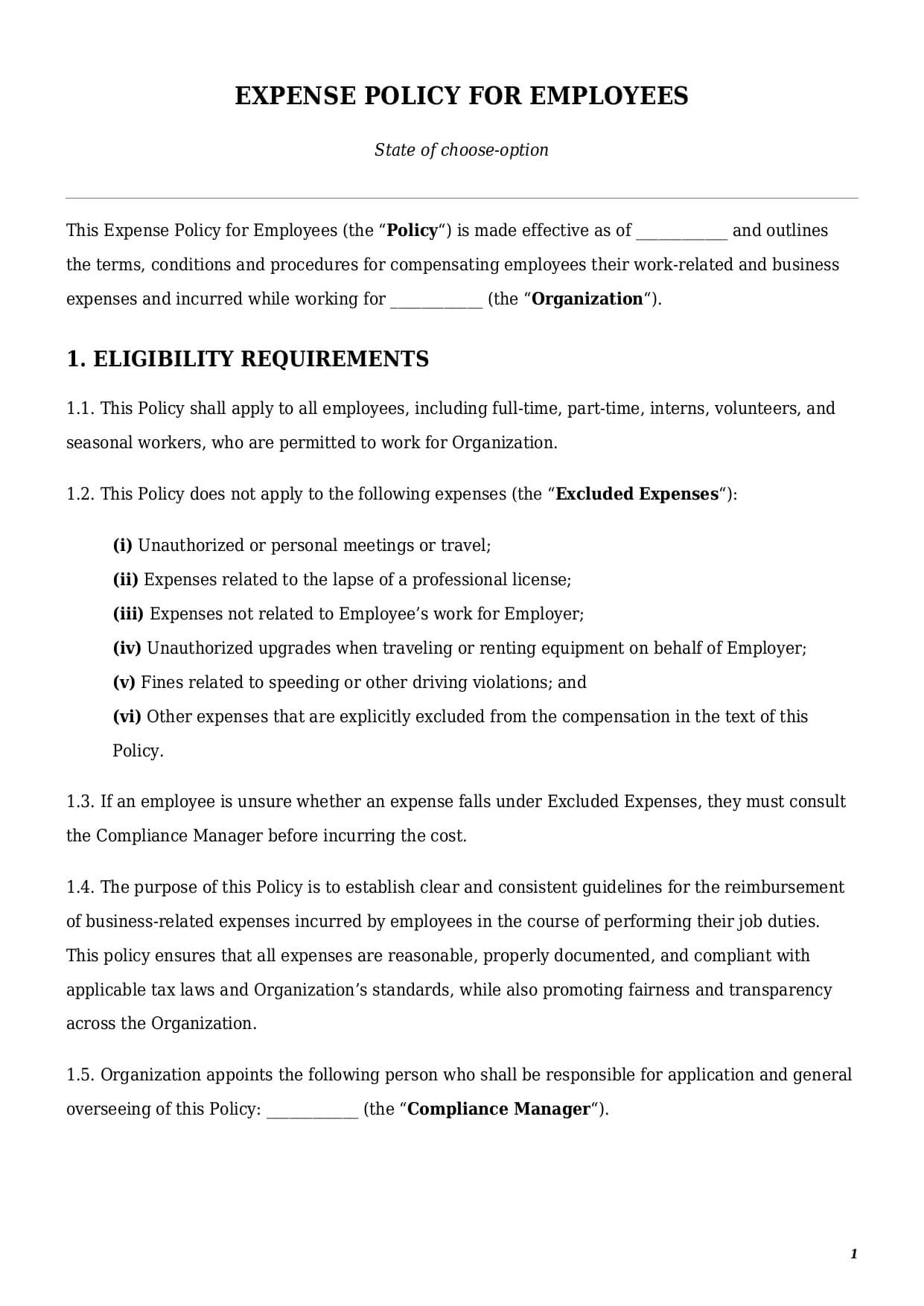
What is an expense policy for employees?
An expense policy for employees is a formal internal document by which an organization or business sets the rules, conditions, and procedures for reimbursement of costs incurred in the course of performing their job duties. The policy’s template defines a legal framework for reimbursement of expenses, including:
- list of eligible expenses;
- maximum daily, weekly, or monthly cap for each type of expense;
- detailed procedure for reimbursement of expenses;
- policy amendment process, etc.
The rules of the expense report policy template normally apply to employees who work for the organization. Employees include full-time and part-time workers, seasonal workers, interns, and volunteers. In certain instances, employees who are on a probation period may not be covered by this policy.
An expense reimbursement policy template will suit organizations of all sizes and types, including startups, businesses, nonprofits, and even large corporations.
How to draft a company expense policy template?
Drafting a company expense policy template is a challenging and long process. It is vital to include all potential expenses employees may request compensation for. Besides that, the wording of a policy shall be clear to avoid ambiguity and potential disputes along the road.
Types of Expenses
Every reimbursement policy template should clarify all types of expenses that the business or organization is ready to cover. There is no mandatory list of expenses that shall be covered in any case. Therefore, each business has a right to define them.
However, all expenses incurred by employees must be directly related to work or business activities. A company expense policy template cannot cover personal expenses of employees. For instance, an employee who orders their lunch every day to the office cannot claim it as a business-related expense.
- Travel expenses: Expenses spent for the purchase of tickets for various means of transportation, taxi charges, mileage for personal vehicles (provided an employee uses them for work), etc. The employer may provide a maximum monthly cap or cap per trip to cover those types of expenses. The text of the expense policy for employees may impose additional limitations. For instance, an employer can prohibit the purchase of business class or first class tickets.
- Accommodation expenses: Expenses for lodging, renting out an apartment, or staying in a hotel or motel while traveling for work.
- Meal expense: Expenses for meals and beverages that employees purchase while on business trips or travelling for work. The text of a policy normally provides daily or weekly limits for meal expenses.
- Entertainment expenses: Expenses related to meeting with potential or existing clients, customers, or key contractors. Entertainment might be an essential part of networking and business development. Therefore, a lot of businesses include them in the expense reimbursement policy template. Usually, an employee might be required to receive a prior approval from their manager or immediate supervisor before incurring this type of expense.
Excluded Expenses
We recommended including excluded expenses in the text of the expenses policy template as well. They are:
- expenses that do not belong to any category of covered expenses;
- expenses that exceed the allowed maximum cap of coverage;
- expenses without prior authorization.
Reimbursement Procedure
One of the core elements of every expense report policy template is the reimbursement procedure. Employees shall know when, how, and to whom to submit their request for reimbursement. Thus, the text of a well-drafted expense policy for employees shall include:
- Reimbursement deadline: This is the maximum period of time after an incurred expense within which an employee may request compensation.
- Submission process: This is a step-by-step guideline on how reimbursement requests should be filed. There are a number of ways an employee may submit such a request, including sending a personal email to a manager. Apart from that, a policy template shall define a person within the organization responsible for the review and approval process. Finally, an employee may need to attach the list of supporting documents confirming incurred expenses. Those documents may include tickets, booking confirmations, bank card withdrawals, etc.
- Approval process: This is a timeline within which an employee’s request for reimbursement shall be approved or rejected.
Publishing the Policy
Once the expense reimbursement policy template is finalized, employees shall read and acknowledge it. This makes a policy become a valid legal document. Without employees’ acknowledgment, a policy cannot become effective.
An employee may confirm their acknowledgment in either of the following ways:
- by signing a copy of a policy;
- by clicking on the check box confirming the policy’s acknowledgment;
- by receiving a personal email with the attached policy.
An organization may wish, from time to time, to update or amend their existing expense policy for employees. Employees shall always be informed about amendments to ensure smooth application of the policy within the organization.
How to customize the expenses policy template at Faster Draft?
To get a fully personalized legal document template, follow a few easy steps below:
- Click the button “Create Document.”
- Answer simple questions in the form.
- Select a template’s format—expense policy PDF or Word.
- Make a payment.
- Download and use instantly customized policy templates for your business or organization.