

.svg) USA
USA.svg) Australia
Australia

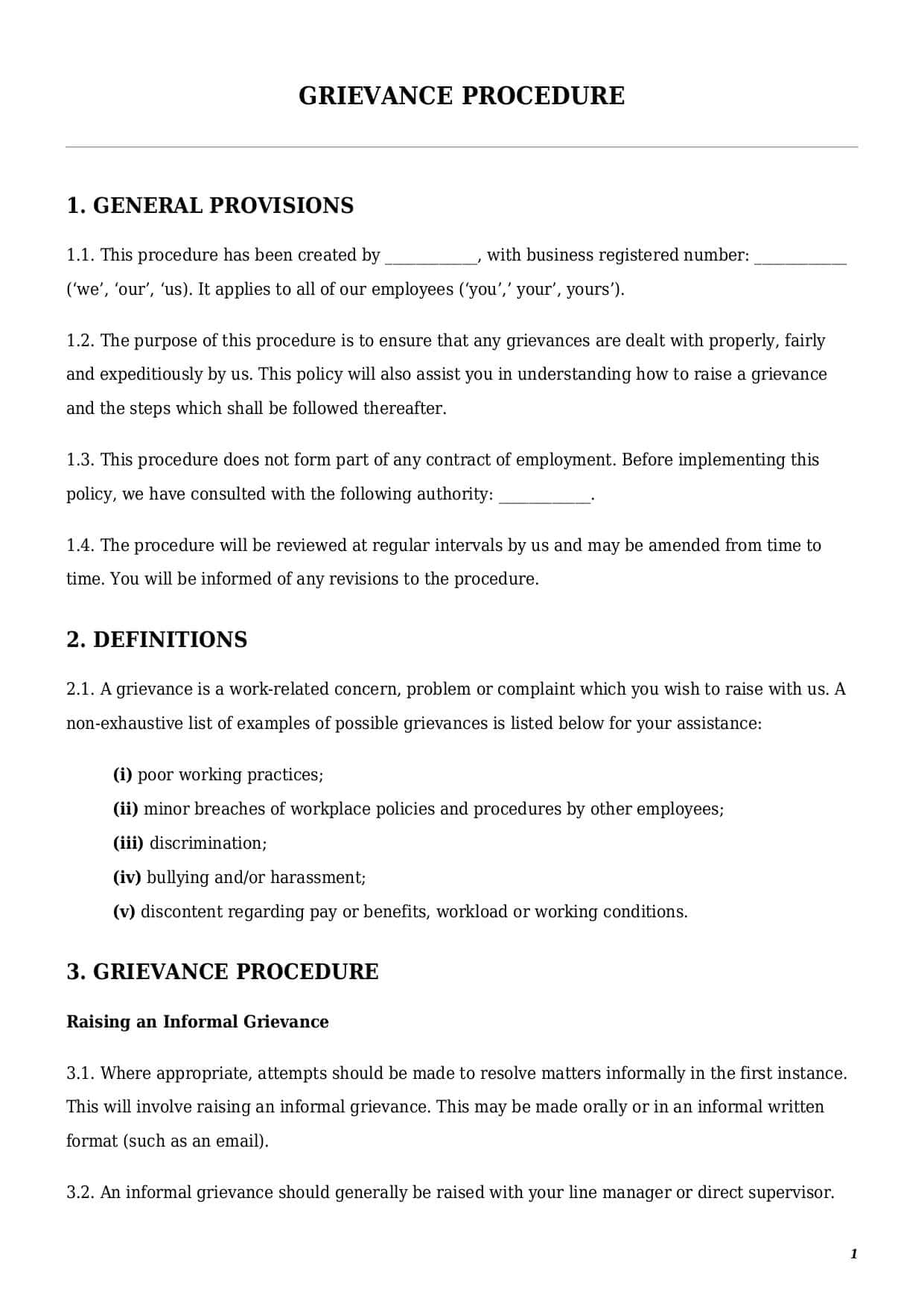
What is a grievance policy in the UK?
A grievance policy, or a grievance procedure, is an internal corporate document by which an employer defines when and how an employee can raise their concern or submit a complaint regarding workplace or work-related issues. This is an ACAS-compliant policy that helps to establish a step-by-step detailed process of submitting a complaint and its further investigation.
This policy template can be helpful for HR managers and departments, SMEs, startups and big companies operating in the UK.
When can UK employees submit their grievance complaint?
The present employee grievance procedure template can be used to address the following concerns related to the work or workplace:
- bullying;
- harassment;
- discrimination;
- unpaid wages;
- unsafe workplace;
- unpaid entitlements, including paid annual leave or sick leave;
- workplace conflicts, etc.
Why do UK businesses need a grievance policy and procedure template?
While UK employment law does not oblige businesses to establish a formal grievance procedure at the workplace, the adoption of the present policy remains a good managerial decision:
- The policy ensures legal protection for both employees and employers in case of an internal investigation.
- The policy creates a consistent legal framework for reporting and investigating complaints.
- The document ensures compliance of all employees with the policy.
- The document supports a professional environment, mutual support and a healthy corporate culture between employees.
What does this grievance policy template include?
A solid and well-drafted grievance policy template should include a number of important elements.
Employer Details
The text of every grievance procedure template should include the full name of the UK employer, registered business address and company registration number as per Companies House.
If the employer has to consult a trade union or other third party prior to the adoption of such a policy, the text of the document should also outline the name of that trade union or third party.
Policy Purpose
It is essential for a grievance procedure template in the UK to define the list of situations in which an employee can address their concern. First, it helps employees to better understand their rights. Second, for an employer, it creates predictability in how such a policy is being applied.
The text of the policy should outline the name of a person within the company responsible for the implementation of that policy. Usually this is a head of the HR or compliance department who is appointed in charge of a grievance procedure. The text of the document must include contact details and working hours of a responsible person.
Submission of Complaint
Every company grievance procedure template shall outline:
- How a grievance complaint can be submitted (by email, in person);
- What should be included in the letter of complaint;
- Timeline for submission of the complaint (for example, within 6 months after the incident);
- The description of the investigation process; and
- Appeal procedure (how an employee can submit the appeal).
Employee’s Rights
Submission of a grievance is always a sensitive matter for all employees. That’s why a well-drafted grievance policy template should:
- Confirm an employee’s right to submit any concern;
- Reassure that an employee’s employment cannot be terminated due to the act of submitting a complaint;
- Protect the confidential nature of such a complaint.
What are the benefits of using this grievance procedure template?
This company grievance procedure template is a helpful internal document SMEs, startups and businesses in the UK often use. By customising the policy template with FasterDraft, you get the following benefits:
- a document drafted by UK solicitors;
- a document available for immediate download right after the purchase;
- a document suitable for usage in England, Wales and Scotland;
- an editable template in PDF and Word;
- a template fully compliant with ACAS guidelines, the Employment Rights Act 1996 and the Equality Act 2010.
How to customise a grievance policy template with FasterDraft?
To get a fully customisable document template, follow a few easy steps below:
- Click the “Create Document” button.
- Answer simple questions in the form.
- Select a template’s format – grievance procedure template PDF or Word.
- Make a payment.
The policy is ready for download and use immediately after the purchase.
What is the difference between a grievance and a disciplinary procedure?
A grievance policy and procedure shall not be confused with the disciplinary policy. Both documents are being used by UK employers together, though they serve a different purpose.
A grievance policy used by an employee to report a concern or file a complaint regarding a workplace-related issue or situation. This policy is a helpful legal mechanism allowing employees to report unpaid wages, unfair dismissal, bullying or harassment between colleagues, corruption, anti-money laundering concerns, etc.
For example, John works as an accountant in a mid-tier London accounting firm. John is entitled to annual paid leave of 30 days, though this year he has only got 20 days. John decides to file a grievance complaint with the HR department.
A disciplinary policy is used by employers to apply disciplinary measures if employees fail to follow rules and requirements in the workplace.
For example, Lucy is constantly late for work every morning. Her line manager issues a disciplinary warning to inform her about the violation.