
.svg)
 United Kingdom
.svg) Australia
Australia

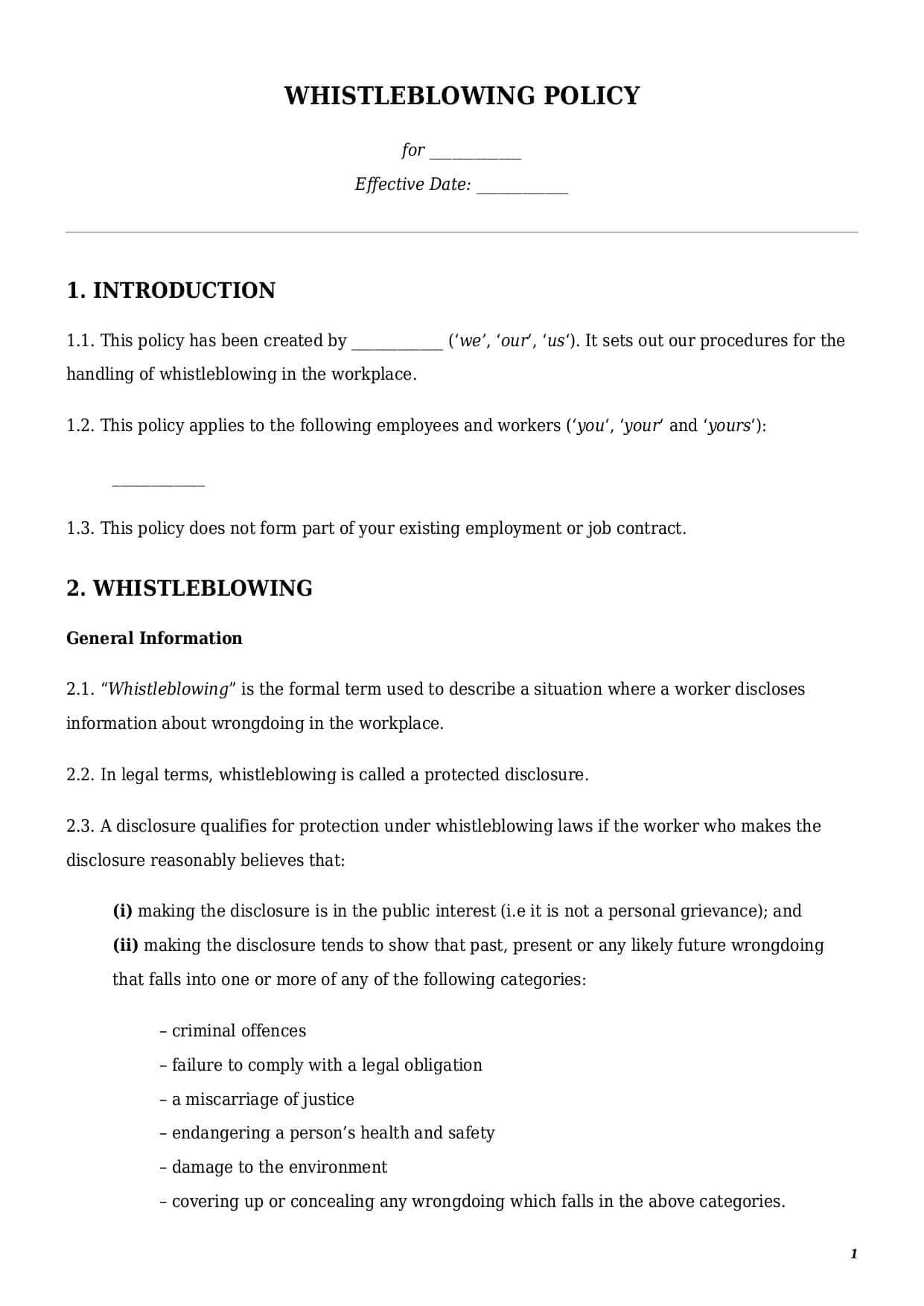
What is a whistleblowing policy?
A whistleblowing policy is a formal internal document that explains how employees and other workers can report suspected illegal, unethical, or improper conduct within an organization. A sample whistleblower policy defines:
- categories of employees to whom this policy applies;
- list of circumstances in which whistleblowing is required;
- investigation procedures (i.e., when, where, and how to report); end
- employer’s confidentiality obligations.
While having a whistleblower policy template is not mandatory, most organizations operating within the U.S. tend to have this policy. The present document remains particularly important for nonprofit religious or charity organizations.
Who needs a whistleblower policy template?
A whistleblower policy could be helpful in building an organization’s internal compliance infrastructure for:
- small businesses that want to make sure they comply with local laws and regulations;
- well-established organizations that need a solid whistleblower policy sample for navigating compliance effectively;
- HR and compliance managers who look for a legal solution for developing an effective whistleblower policy within a company.
What to include in a whistleblowing policy template?
A solid and well-drafted whistleblowing policy template must include a list of key elements to be a complete and valid legal document. Below we made a short summary of all information you must include in your template for a whistleblowing policy.
Policy Purpose
In the introduction part of every whistleblowing policy, you shall, first, provide information about the organization that adopts this policy. The next step is to explain in simple words the purpose of the policy and which goals an organization plans to achieve by implementing such a policy.
Finally, the text of every whistleblowing policy sample shall include an effective date. This is the date on which the policy is being adopted and becomes effective.
Scope of Application
Another important element every whistleblower policy template should have is the list of individuals to whom it shall apply. Defining the policy’s scope of application is essential to ensure its proper practical application. All in all, each organization shall decide if their whistleblower policies shall apply to
- part-time, full-time, or both categories of employees;
- interns or volunteers (this is particularly important when drafting a nonprofit whistleblower policy);
- contractors, clients, or customers.
Protected Disclosures
A protected disclosure is a statement of an employee by which he or she wants to report any past, ongoing, or future wrongdoing that occurs in the organization and relates to:
- criminal offenses;
- failure to comply with an organization’s internal policies;
- risk to the health or life of other employees;
- damage to the environment, etc.
It is important to remember that making such a disclosure is not an employee’s obligation but rather a legal right. At the same time, an employer cannot restrict an employee’s right to report by signing a non-disclosure agreement with such an employee.
This policy, however, cannot be used for an unethical disclosure. In other words, when an employee reports intentionally false information about third parties. In that case such an employee may face additional disciplinary charges, including suspension from work or even termination of an employment contract.
Confidentiality
Whether you’re creating a business or nonprofit whistleblower policy template, inclusion of an organization’s duty of confidentiality is a must-have. This means that an organization undertakes a legal obligation to keep confidential all information related to protected disclosures under the policy, including the identity of an employee who makes such a disclosure.
Inclusion of an organization’s non-disclosure obligation is vital to ensure that an employee who reports an issue feels safe and protected.
Investigation Process
Every good whistleblowing policy example must define the clear process of how the investigation of an employee’s concern shall take place. Amongst the elements that shall be included in the policy are the following:
- To whom a complaint shall be submitted (e.g., compliance manager, HR manager);
- How a complaint shall be submitted (e.g., via an organization’s internal database, in person);
- What is the duration of an investigation process (e.g., 1 week or 1 month)?
How to customize a whistleblower policy at FasterDraft?
To get a fully customized legal document, follow the easy steps below:
- Click the “Create Document” button.
- Answer simple questions in the form.
- Select a template’s format—whistleblowing policy PDF or Word.
- Make a payment.
- E-sign, download, print, or publish this document.