
.svg)
 United Kingdom
.svg) Australia
Australia

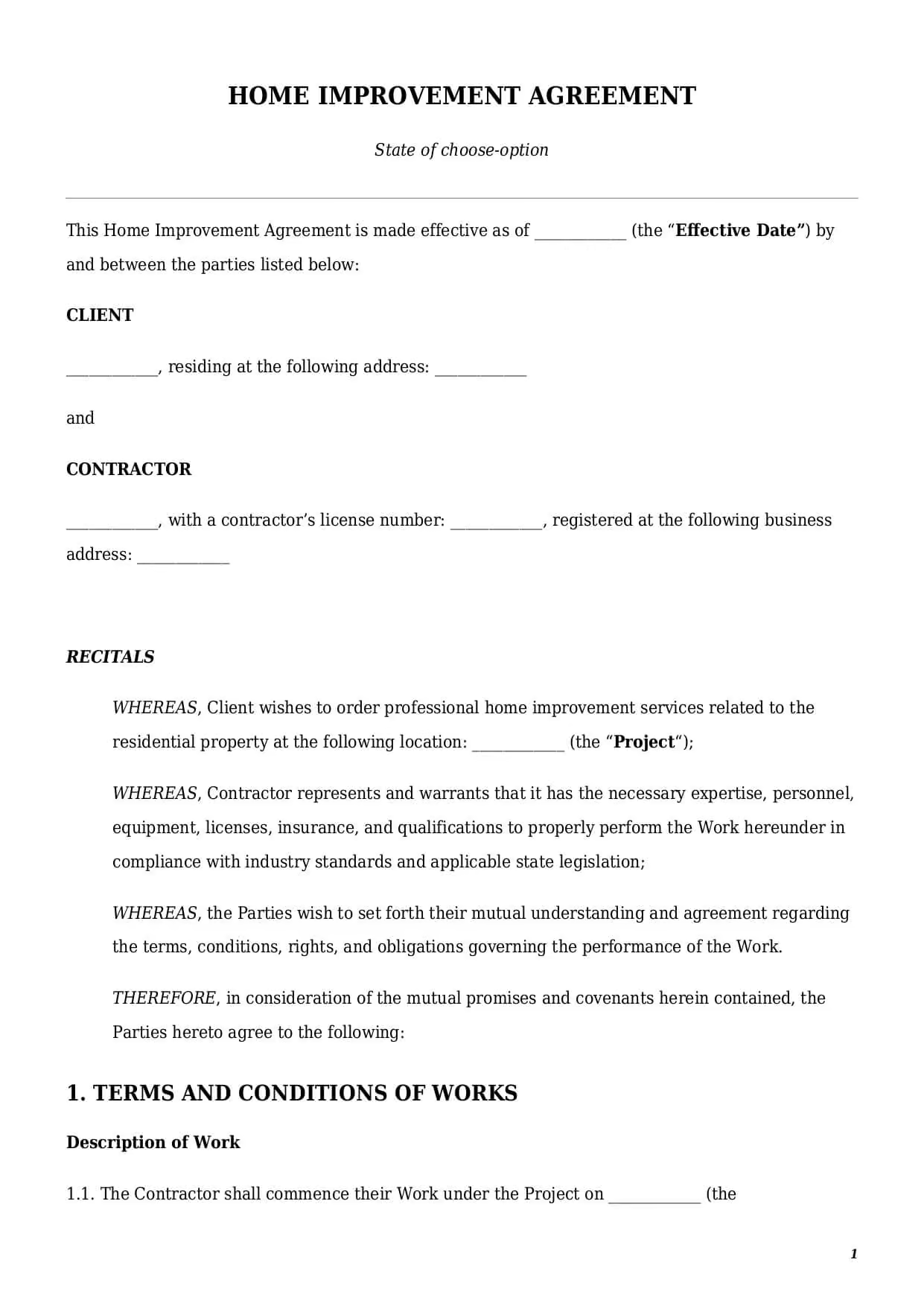
What is a home improvement agreement?
A home improvement agreement is a legally binding contract between a homeowner and a contractor that outlines the scope of renovation, repair, or remodeling work to be completed on a residential or commercial property. In simple terms, this document answers the following questions:
- what work will be done;
- how much it will cost;
- when it will be finished; and
- what are each party’s responsibilities.
The main purpose of home improvement contracts is to define terms and conditions for the provision of minor repair and improvement for the property. The parties involved in a contract are a client and a contractor.
A client is always a person that orders repair and improvement services and is ready to pay for them. It could be a homeowner or a property manager. The works could include flooring, painting, roofing, remodeling, etc. A contractor is a professional that provides requested works and services in exchange for remuneration.
Having a solid home improvement contract template reduces the risk of miscommunication, disputes, or unexpected costs because all expectations are documented in one place.
What’s included in a home improvement agreement template?
Every good home improvement contract example must include the key elements below:
Project Details
The most important pillar for every home improvement contract agreement is a detailed description of the project itself. A contractor should be well aware of:
- location of the property that requires improvement or repairs;
- detailed and accurate description of the property in question;
- scope of work to be performed; and
- timeline of the project (i.e., start and end dates, work schedule).
Materials and Equipment
The parties to a home improvement contract sample must decide who shall be responsible for the provision of necessary materials and equipment for the performance of the work.
Unlike with the construction agreement, the present contract is a simple document that parties normally use to perform minor repairs or improvements to the property. Therefore, in most of the cases a client remains solely responsible for the provision of all required materials for the performance of work. For instance, when it comes to a residential home renovation contract, a client is responsible for the provision of materials, while a contractor is responsible for the provision of equipment and tools.
Payment Terms
Another must-have element for all home improvement contracts is payment terms. A solid draft document must define:
- how much a contractor should be paid (e.g., it could be a fixed remuneration or installment payments);
- when to make a payment (e.g., once all work is done); and
- how to make a payment (i.e., acceptable payment methods).
Disclaimers
Usually parties enter into a home improvement contract by guaranteeing each other certain facts. For instance, a contractor must reassure a client that they have all necessary licenses, permits, expertise, and insurance to provide requested services in accordance with applicable state and federal laws.
At the same time, a client must confirm that he or she is a verified owner of a property that requires repairs, as well as provide a contractor with electricity, water, sewage, and other utilities required for the performance of works.
Termination
A contract for home improvement ends by the full completion of performed works.
However, each party should have the right to end the contract earlier in one of the following circumstances:
- Material Breach. This is a serious violation of the provisions of the contract that allows either party to immediately end this contract. Usually, the list of material breaches should be defined directly in the text of a home improvement contract sample. For instance, a material breach is a non-payment of fees, delay in the provision of requested materials, absence of required equipment, etc.
- Bankruptcy. Either party can end this home improvement contract once there is a bankruptcy case initiated against the other party.
- Inability to Perform. When a contractor is not able to perform requested work due to the absence of a required license or insurance, this is considered a material breach.
Applicable Law
The text of every legal home repair and remodel agreement must define applicable law. This is a law that applies to the execution, interpretation, and termination of the contract. Parties are free to choose any state they prefer to. However, the most common options will include:
- a state where either party to a contract is based or registered;
- a state where the property is located.
Who should use this home improvement contract template?
This home improvement contract is a necessary and helpful legal tool for:
- Homeowners. When you need to hire a contractor to perform some repairs on your house or apartment, having a solid draft agreement is a must.
- Independent contractors. When you provide home repair and improvement services, having a well-written home improvement contract template is a mandatory requirement to protect your business.
- Property Managers. When you maintain and supervise various properties, sometimes an immediate repair or improvement could be urgently required. This is when a home improvement contract agreement outlines all important elements for the provision of works.
How to customize a home improvement contract at FasterDraft?
To get a fully customized legal document, follow the instructions given below:
- Click the “Create Document” button.
- Answer simple questions in the form.
- Select a template’s format—home improvement agreement template PDF or Word.
- Make a payment.
- Download, print, and sign the document.