

.svg)
.svg)
Letter of Demand
 PDF and
 Word
Word
This template is designed for Australian business owners, landlords, contractors, freelancers, and individuals who need a straightforward way to recover money owed for goods supplied, services provided, or other unpaid obligations.
Reviews

What is a letter of demand?
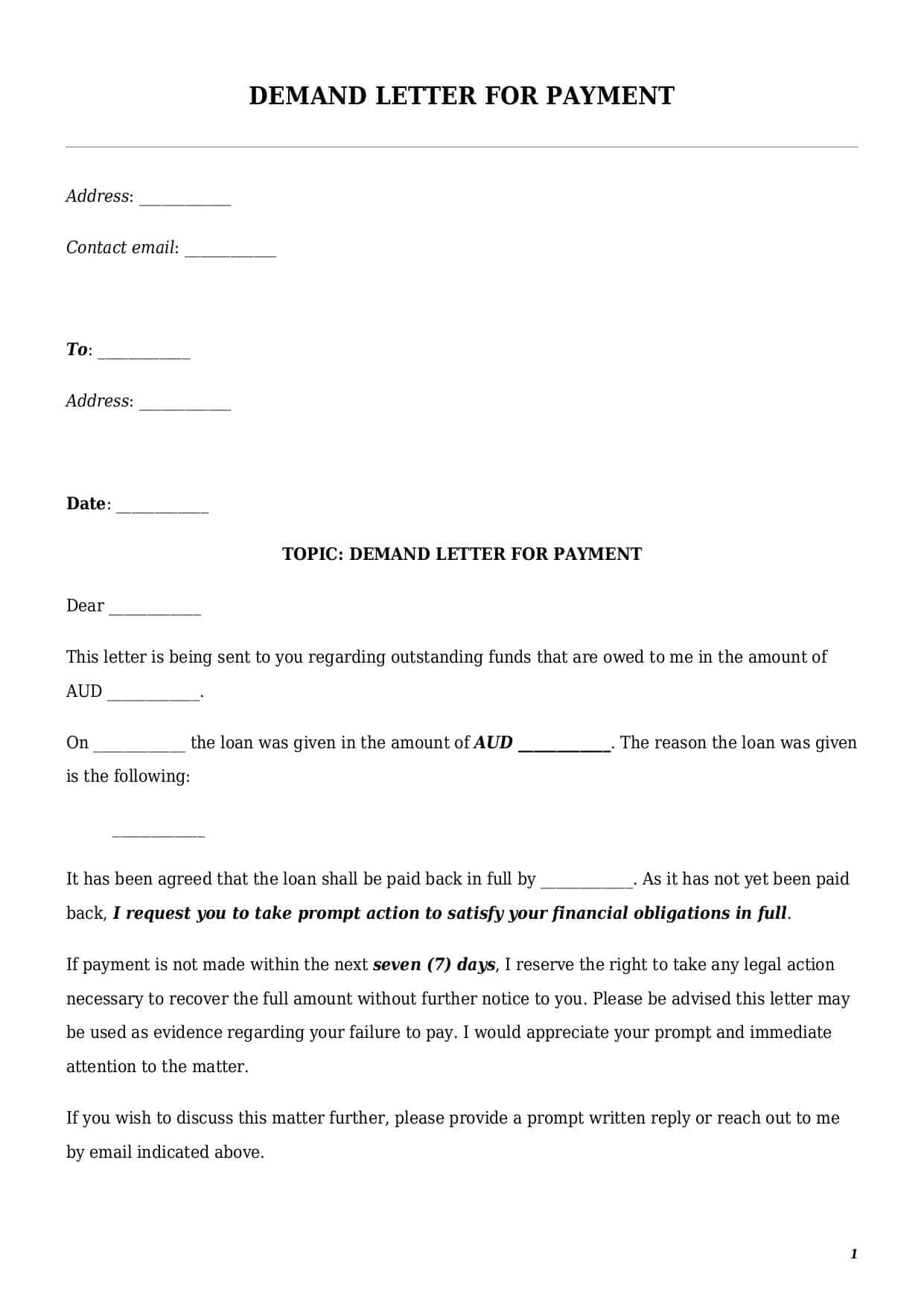
A letter of demand is a formal written request to a debtor requesting them to make the payment before further action is taken. The letter template defines the identification details of a sender and a debtor, the outstanding amount, payment deadlines, and potential legal actions.
The parties involved in a letter of demand template are a sender, also known as a creditor, and a debtor. A sender is a person or business who wants to get the payment for services rendered, work performed or goods supplied. A debtor is a business, consumer or other third party that owes the money.
A properly structured and professionally drafted template of letter of demand helps to resolve a dispute efficiently. The document cannot be used, however, to request unpaid salaries under employment contracts.
What to include in the letter of demand template?
Australian laws do not prescribe a mandatory template individuals or businesses should use for letters of demand. At the state or territory level certain Small Business Commissions could provide general guidance on how to draft a template letter of demand. Moreover, some states, like New South Wales or Queensland, provide general samples of the letter of demand template QSD on the official website of the Small Business Commissioner.
Below is a key summary of the most essential elements a solid letter for payment demand must include.
Sender Details
The template letter of demand should begin with identification details of a person or business sending this letter. These details include the full name, registered business address, contact email and phone number. If the sender is a company or business, the inclusion of an ACN or ANB number is also necessary.
Stating clear details of a sender allows the recipient of this letter to quickly identify who the letter is from.
Last but not least is the inclusion of a sender’s signature. Without a signature, a template of letter of demand cannot become a legally binding document.
Debt Details
The text of every letter of demand must explain the reason why the debt occurred. The most common reasons include:
- loan agreement;
- provision of services;
- performance of works;
- delivery or sale of goods, etc.
If the debt arose based on the contract or invoice, the relevant document name, reference number and date of issuance should be included.
It is also important to include the total outstanding amount of debt in Australian dollars. If GST applies, the price should be mentioned, including GST.
Repayment Details
Another important pillar for a template of letter of demand is specifying the payment method and schedule according to which the debt shall be paid. The repayment timeframe could be indicated as a fixed date or as a period of days or weeks. Providing clear repayment terms helps avoid confusion and increases the likelihood of timely payment.
Who can use this template letter of demand?
In the course of provision of services or delivery of goods, non-payment situations are fairly common. The present letter of demand template may be helpful for:
- small business owners and startups who need a reliable letter template to receive payment for unpaid invoices;
- individuals seeking to recover money owed by friends, family members, or other third parties;
- independent contractors and freelancers who need a professionally drafted letter of demand template for services rendered or work completed.
How to customise a letter template at FasterDraft?
To get a fully customisable template for letter of demand for your situation, follow a few easy steps below:
- Click the “Create Document” button.
- Answer simple questions in the form.
- Select a template’s format – letter of demand template Australia PDF or Word.
- E-sign.
- Make a payment.
- Download the full template instantly.
Table of content
Frequently Asked Questions (FAQ)
-
1. When should I use a letter of demand?
Businesses and individuals can use this letter of demand template in a wide range of situations, including requesting a payment for provided services, delivered or sold goods, loan agreements or other contractual arrangements.
-
2. Is this template legally valid in Australia?
Yes, the present template of letter of demand is compliant with relevant Australian consumer laws, as well as state and territory legislation.
-
3. Shall I use a free letter of demand template Australia from the internet?
We would not recommend using free letter templates from the Internet for several reasons. Firstly, the template may not comply with applicable Australian laws or be suitable for use in Australia. Secondly, the template may include legal errors and mistakes, making the final document potentially invalid. Finally, the document template may not be appropriate for your circumstances.
Therefore, it is always advisable to use only a customisable template for letter of demand.
-
4. What happens if the debtor does not pay after sending the letter?
Typically after sending this letter of demand template, a recipient is given a grace period to settle the debt. The grace period is not defined in the law and ranges between several weeks and a few months. The exact duration of the grace period depends on the type of relations, whether the recipient is a consumer, and the amount owed.
-
5. What are the most common mistakes to avoid when drafting a letter of demand template Australia?
Most businesses and individuals should be well aware of the most popular errors:
- First, a letter is being sent before the payment due date;
- Second, a letter is drafted in rude and unprofessional language.
- Third, a letter is not compliant with guidelines issued by the Small Business Commissioner applicable in a relevant state or territory;
- Finally, a letter omits the final outstanding payment or the final payment deadline.
-
6. What are the requirements for the letter of demand template NSW?
Small businesses registered in New South Wales can access free mediation services provided through the Small Business Commission. It means that if a business’s demand for payment is not satisfied within the agreed timeframe, the dispute can be escalated to the Commission of New South Wales for mediation.