

.svg)
.svg)
Shareholders Agreement
 PDF and
 Word
Word
Reviews

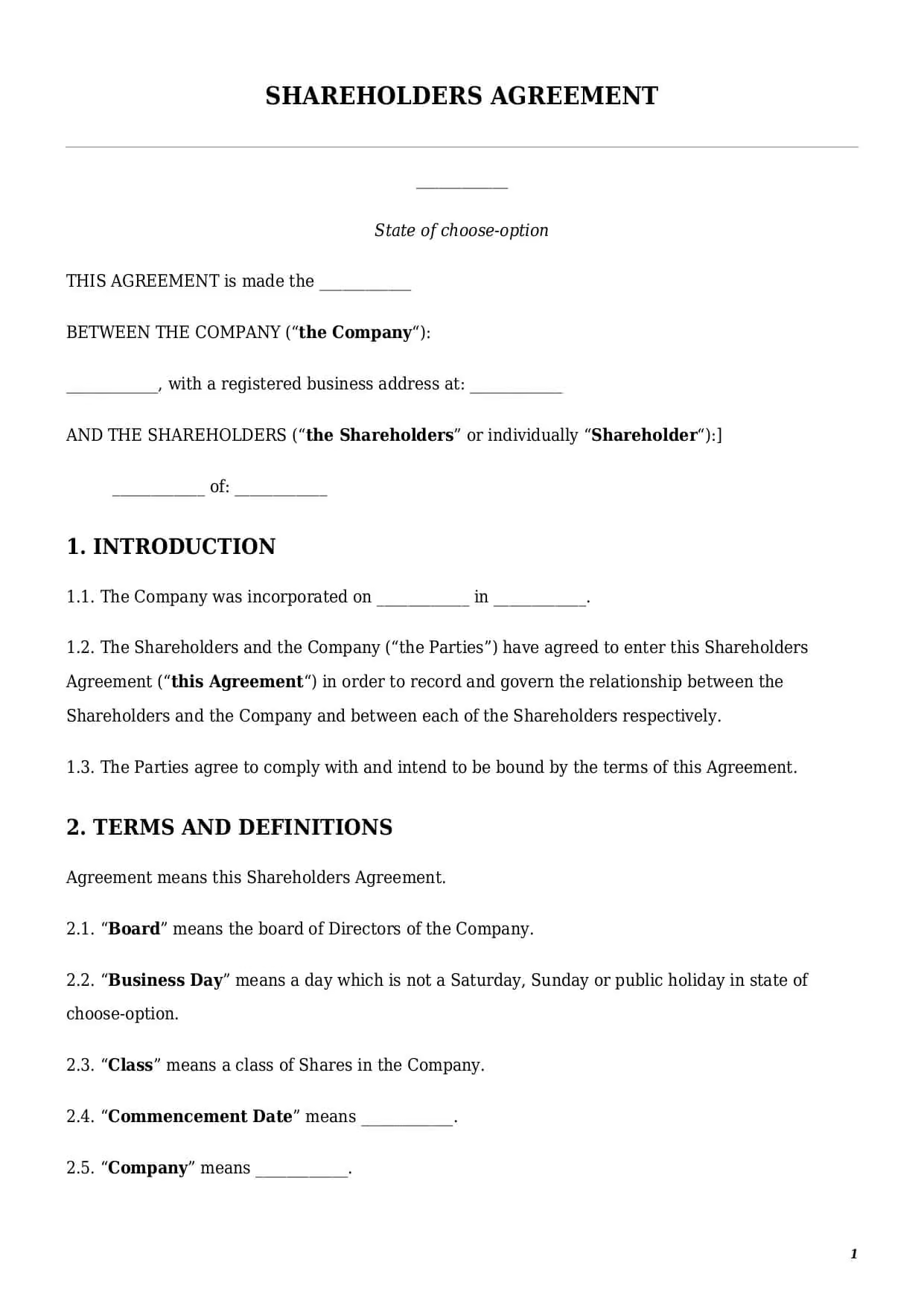
What is a shareholder agreement in Australia?
A shareholder agreement is a private legal contract between the shareholders of an Australian company and, in some cases, the company itself. The document defines the rights and obligations of shareholders, including rules for the profit distribution, voting at shareholders meetings, exit arrangements and other corporate matters.
Although a shareholder agreement template is not a mandatory document in Australia, many businesses choose to have it.
The present customisable template could be used for all types of companies in Australia and can be adapted to accommodate any number of shareholders.
Who should use this template?
This shareholders agreement sample is suitable for:
- Australian startup founders seeking a clear legal solution to help them to manage the company together;
- investors looking to invest in Australian businesses and need a good shareholders agreement template to secure their investment;
- co-founders who want to set up a clear legal framework for operating and growing a business together;
- existing shareholders who require a shareholder agreement sample to regulate key aspects of the company’s governance and profit sharing.
What’s included in the shareholders agreement template?
Australian law, including the Corporations Act 2001 (Cth), does not prescribe a mandatory shareholder agreement format. As a shareholder agreement is a private contract between the shareholders and the company, parties are free to regulate any matters relating to the management, operation and governance of the company.
Below there is a breakdown of the most important clauses a solid, comprehensive shareholder agreement Australia sample must include.
Shareholders’ Details and Capital
Each shareholders agreement in Australia shall outline the list of the parties who sign it, including:
- full name (there a shareholder is a person) or the full legal name (here the shareholder is a company);
- ACN or ABN number (here the shareholder is a business or a company);
- mailing address;
- contact details (for example, phone number and email);
- the number of shares held by each shareholder (including share classes, if applicable).
Shareholder Rights and Obligations
Another important component for the Australian shareholder agreement template is the list of rights and obligations each shareholder must have. Such a list typically regulates a wide range of topics, including rights and obligations related to the voting in the meetings, transferring of shares, withdrawal from the company, appointment of directors, and other issues.
Director appointments
In the text of a shareholders agreement shareholders can set out the election process of directors who are responsible for managing daily operations of the company. This section commonly covers:
- Appointment Process. This clause defines how the election shall take place – for example, unanimously, by simple majority of all shareholders, etc.
- Nomination of Candidates. This clause must set out the rules regarding submission of candidates for a director’s position. These rules may be linked to shared ownership or other agreed criteria.
- Removal of Directors. This clause must define how the voting of shareholders takes place if the director shall be removed. For example, shareholders may be required to vote unanimously, or the decision could be adopted by a simple majority.
Shareholders’ Meeting
The text of a shareholders agreement sample may regulate how and when shareholders meeting are held and which matters require voting and shareholders’ approval. In particular, this section may define:
- quorum requirements for key decisions (for example, winding up the company, liquidation, and distribution of dividends);
- whether it is possible to hold meetings online or remotely;
- whether voting is possible through the proxy;
- how frequently the meetings of shareholders should be held, etc.
It is important to note that the provisions of the shareholders agreement cannot overrule provisions of the company’s constitution. Where there is any inconsistency, the constitution will prevail. For example, if the company’s constitution states that shareholder meetings shall take place every three months, the shareholder agreement cannot state a longer period, like every 6 months or more.
Transfer of Shares
According to the general provisions of the Corporations Act 2001, every shareholder should have the right to freely dispose of their shares to other shareholders or third parties at any time. Such a right may only be limited by the company’s constitution or the provisions of the shareholder agreement. If required, a shareholder agreement Australia can include the following limitations:
- Lock-in Period. This is a certain period of time after signing the shareholder agreement, during which a shareholder cannot sell, donate or dispose of in any other way all or part of the shares they own. A lock-in period could last for several months or several years.
- Drag-Along Rights. The right for majority shareholders to require minority shareholders to sell their shares to a third party on the same terms.
- Tag-Along Rights. In that case, if a shareholder sells their shares to a third party, minority shareholders may choose to join the sale on the same terms.
- Notice Period. A shareholder may be required to submit a prior written notice to other shareholders informing them about the intent to sell shares to a third party. In that case, if either of the existing shareholders wishes to purchase that sale, they may exercise their right of the first purchase.
Above there is a list of the most common limitations and requirements that are typical for the transfer of shares in an Australian company. It is also possible to include any other corporate limitations the parties may consider appropriate.
Termination
Since a shareholders agreement is a contractual arrangement between the shareholders, or the shareholders and the company, the contract has to provide grounds for its termination. All in all, this agreement shall end:
- if all shareholders agreed in writing to terminate a shareholders agreement;
- if the company goes into liquidation or winds up;
- if only one shareholder remains in the company;
- if the company undertakes an initial public offering (IPO).
Difference between the Shareholders Agreement and the Company Constitution
At first glance these two documents may appear similar. This is partially true, as both the shareholders agreement and the company constitution regulate the management and operation of companies in Australia. At the same time, their purpose and legal status differ significantly.
- Parties. A shareholder agreement template is a private contract entered into between all or some of the shareholders of the company in Australia. In contrast, the company’s constitution is a public document that is adopted by all founders at the time of the company’s formation.
- Timeline. Entering into a shareholders agreement is optional and can occur at any stage. Some shareholders may never have it, while others can sign this document before the company’s registration or at any time of incorporation. A company constitution, however, forms the foundation of the company and must be adopted before or at the time the company is registered.
- Content. The Australian Corporations Act 2001 defines the list of mandatory clauses the company’s constitution must cover. By contrast, there is no prescribed format for a shareholders agreement. Its structure and content are flexible and can be tailored to reflect the specific needs and objectives of the shareholders.
- Legal Status. A company constitution is a mandatory document that underpins the company’s registration and ongoing operation. A shareholders agreement in Australia, on the other hand, is an optional document that is being signed only when shareholders wish so.
Why Choose FasterDraft for Legal Templates in Australia?
If you choose FasterDraft to create your fully customisable shareholder agreement template Australia, you automatically enjoy the following benefits:
- templates created by real legal professionals, and never by AI;
- templates that align with Australian laws and applicable state and territory legislation;
- templates that are regularly updated by our team;
- templates that are written in plain English for real people;
- legal documents that are fully customisable;
- documents available in PDF and Word formats;
- templates are ready for instant download and use after the purchase; and
- templates designed for Australian businesses, startups and freelancers.
How to customise a shareholders agreement for Australia with FasterDraft?
To get a fully customisable legal document template, follow the instructions given below:
- Click the “Create Document” button.
- Answer simple questions in the form.
- Select a template’s format – shareholder agreement Australia PDF or Word.
- Make a payment.
- Instantly download the document.
You can now use this template for your company.
Table of content
Frequently Asked Questions (FAQ)
-
1. Do I need a shareholder agreement in Australia?
No. Having a shareholders agreement for an Australian company is a matter of choice rather than a legal necessity. Neither the Corporations Act 2001 nor state and territory legislation obliges shareholders of an Australian company to enter into a shareholder agreement template.
-
2. Is this template suitable for startups?
Yes. You can customise this shareholders agreement sample, which could be used for already existing companies operating across Australia or those in the process of formation or registration. The present template can be used for all types of companies, including proprietary companies limited by shares or unlimited with share capital and public companies (as per Section 112 of the Corporations Act 2001 (Cth)).
-
3. Can I customise it for multiple shareholders?
Yes. A Shareholders agreement template may be entered into between the shareholders or between shareholders and the company. It is also possible to be entered into between a single shareholder only and the company.
-
4. Does it cover minority shareholder protections?
Yes. This shareholders agreement template Australia allows you to include corporate mechanisms aimed at protecting the rights of minority shareholders, including tag-along and drag-along rights.
-
5. Can this replace a company constitution?
No. The company’s constitution is a separate legal document without which the registration of the company in Australia is not possible.
A shareholder agreement in Australia is an optional legal document that provides detailed regulation of the rights and obligations of shareholders, the company’s management and the distribution of the profit and losses. All in all, the shareholder agreement cannot replace or substitute the company’s constitution.
-
6. Shall I use a free shareholder agreement Australia from the Internet?
Using someone’s legal documents could be risky, and here is why:
- Firstly, the document may not be suitable for your particular case. For example, the free template you may choose applies to a public type of company, while you have a private company.
- Secondly, the document can be created by AI. Drafting legal documents requires the deep analysis of legal acts and customisation, which is not yet fully manageable by AI.
- Thirdly, a free shareholder agreement Australia template may not include sufficient regulation you may want for your own company.
- Fourthly, the document may be outdated or include serious legal errors or mistakes.
- Finally, the template may not be suitable for companies operating in Australia