

.svg)
.svg)
Residential Lease Agreement
 PDF and
 Word
Word
A residential lease agreement template is a powerful legal tool that helps to frame relations between owner and tenant with regard to a rented property. This template is suitable for any type of residential property, like a house, apartment, or condo.
Reviews

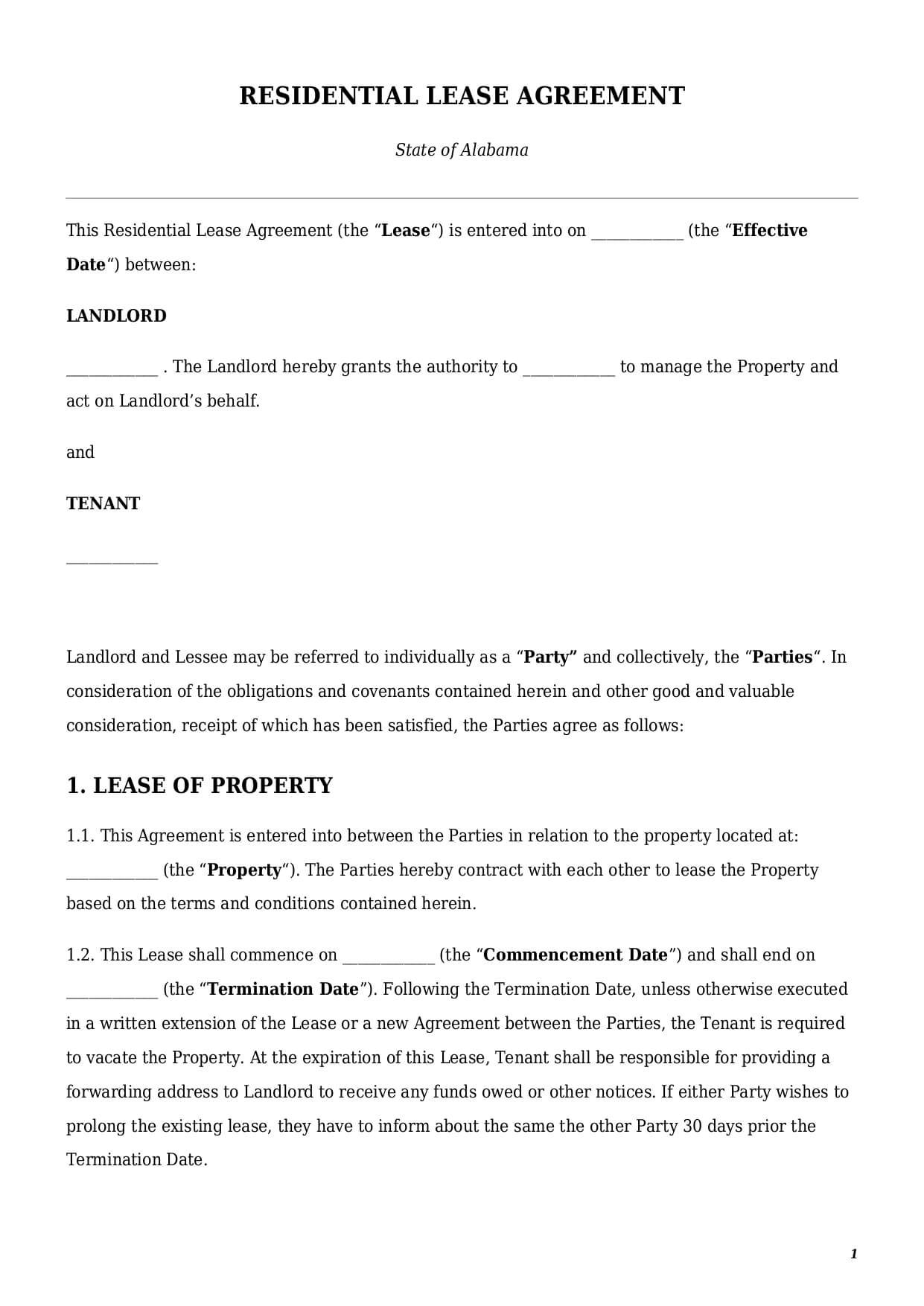
What is a Residential Lease Agreement?
A residential lease agreement is a legally binding contract between the owner of a property and a tenant who wishes to rent it. This contract helps to set out the most important terms and conditions for renting residential property.
A residential lease agreement template is being created between the owner, known as a landlord, and a tenant (i.e., a person who wishes to live in a rented property). A landlord under the residential lease can be an individual or a company, while a tenant should always be a physical individual. It is a common practice when a residential lease agreement is signed by a management company that acts on behalf of a landlord. This is especially the case if a landlord does not have time to deal with tenants or has several properties under administration.
As a rule of thumb, a residential lease agreement form is used to rent a property for a long period of time. Therefore, if you are an owner of a property who wishes to rent it out for a short period of time, it is better to use a short-term rental agreement instead.
A legally binding residential lease agreement template should contain the following key elements:
- duration of rental period (from a few months to a few years);
- amount of monthly rent payments and other additional charges (e.g., utilities bills, county taxes, etc.);
- amount of security deposit;
- detailed rules for property usage (e.g., a landlord may not allow pets within the rented property);
- termination clause and dispute resolution.
Every state law within the USA contains its own rules regarding the content and application of residential lease agreements. For example, when creating an Arizona residential lease agreement form, a security deposit should be returned within 14 business days after the lease termination. Therefore, inclusion of a longer period may violate state laws. Contrary to that, while drafting an Illinois standard residential lease agreement, a landlord has 30 days to end the lease if no deductions are being made, but up to 45 days if they’re providing an itemized statement of deductions, under the Security Deposit Return Act (765 ILCS 710).
Fixed-Term Lease vs Month-to-Month vs Short-Term Rental — which one do you need?
Depending on the planned duration of the lease agreement, type and purpose of the lease and rights of the parties involved, you may need a specific type of the lease agreement. In practice there are four most common lease agreement templates the future landlords and tenants have to choose from – fixed-term lease, month-to-month lease, short-term rental and apartment lease agreement.
| Fixed-Term Lease | Month-to-Month Lease | Short-Term Rental Agreement | Apartment Lease Agreement | |
|---|---|---|---|---|
| Purpose | Creates a tenancy for a fixed period with a determined end date. | Creates a recurring tenancy that automatically renews each month until terminated. | Temporary occupancy for vacation, travel, or other short stays. | Special lease for an apartment or condominium unit. |
| Used for | Single-family homes, duplexes, townhouses. | Apartments, houses, condominiums, duplexes, and other residential properties. | Vacation homes, Airbnb/VRBO beach houses. | Apartments, condominiums, lofts, studio. |
| Duration | Fixed term as defined by the parties. | Renews every month until either party ends. | From one night to several months. | Fixed term as defined by the parties. |
| Automatic renewal | No, unless the lease contains a renewal clause or converts to a periodic tenancy. | Yes. Renews automatically every month. | No. | Depends on the agreement. Many convert to month-to-month after the initial fixed term. |
| Federal disclosures apply (Lead-Based Paint, etc.) | Applies. | Applies. | Applies. | Applies. |
| Security deposit | Yes. Governed by state law. | Yes. Governed by state law. | State law + separate damage deposit depending on the host | Yes. Governed by state law. |
| Rent increases during the tenancy | Not permitted. | Upon providing the notice. | Not permitted. | Depends on whether the apartment lease is fixed-term or month-to-month. |
| Termination | Expires automatically at the end of the rental period. | Prior written notice required | Expires automatically at the end of the rental period. | Fixed-term apartment leases generally expire automatically, while month-to-month apartment leases require the applicable state termination notice. |
How to Write a Residential Lease Agreement?
Writing a residential lease agreement template can be a challenging task. Therefore, we created for you a list of essential tips to keep in mind:
Details of the Parties
When entering a residential lease agreement, make sure you know the landlord. A landlord is a person who owns the property and thus has a right to rent it out. If you sign a residential lease agreement with a management company, ask them if they have the proper rights to represent a landlord. Usually, there should be a kind of services agreement or a simple power of attorney between a landlord and a management company.
The tenants who should sign a residential lease agreement template are individuals that plan to reside in a rented property. Thus, if this is a family, then all family members should be listed as tenants.
Description of the rented property
Another essential pillar to every agreement on lease residential template is a property’s description. It should include:
- size (in sq. ft.);
- detailed address and location;
- details of a parking space (if applicable);
- description/list of all amenities and furniture within a rented property;
- description of a property’s overall condition.
Duration of the lease
The duration of the lease can be any term from a few weeks or months to several years. Parties may also include an automatic prolongation clause in their residential lease agreement template. Once included, a lease is being automatically prolonged for the same period of time after its termination, unless terminated by either party in writing.
It is vital to include a start date for the lease as well—i.e., the date on which a tenant can move in. A start date can be the same date as the date of signing the residential lease agreement template or any other date.
Monthly rental payments
Another key element for every residential lease agreement template is the amount of rent payments. Rent should be paid every month, unless another frequency is agreed upon by the parties. It is also crucial to indicate available payment methods like bank withdrawal, cash, check, etc.
Parties may also set up late fees once a tenant fails to pay rental payments in a timely manner. The way how late fees should be paid by a tenant may differ depending on the state. For example, for a California residential lease agreement, a tenant has 3 days to cure the breach or vacate the property.
Payment of security deposit
A security deposit is used to protect a landlord from possible breach of a residential lease agreement by a tenant. As a rule of thumb, a security deposit is being returned upon termination of the lease. If there is irreparable damage to a property or debts, a security deposit can be used by a landlord to cover in full or in part such damage.
It is crucial to establish the period of time within which a landlord should return a deposit once the lease ends. Some state laws, however, provide their own regulation. For example, when creating a Florida residential lease agreement, a security deposit should be returned within the first 15 days after the lease termination. This is a maximum period of time that cannot be overthrown by a landlord or tenant. Some other states may have a longer period of time for a landlord to return a deposit. For instance, according to a standard Texas residential lease agreement, a landlord has up to 30 days to make a return.
Utilities bills and charges
Utilities are not included in the monthly payment and should be covered by either party. Thus, from the very outset, parties should agree on every separate charge and bill they have to split in between. The most common bills and charges a rental property may have are the following:
- electricity and water bills;
- phone and Wi-Fi;
- gas;
- country or property tax;
- trash collection (if applicable), etc.
Household rules and restrictions
According to a residential lease agreement, a tenant can use a rented property for residential purposes only. Besides that, a landlord may wish to consider the following limitations:
- smoking policy;
- pets policy;
- maintenance responsibility (usually a landlord should be responsible for major repairs, while a tenant for minor repairs);
- quiet hours (e.g., no parties after 8 pm);
- guest policy (e.g., a guest cannot stay longer than one night).
Termination clause
A good residential lease agreement template should include a termination clause. This clause defines when and how the lease should be terminated. As a general rule, a residential lease agreement expires automatically upon its termination date.
If, however, there is no termination date, the lease agreement can end by either party’s will. This could be done by sending the other party advance written notice about the termination. For example, under Florida Statute §83.56(3), a landlord may terminate for nonpayment of rent after the default continues for just 3 days, excluding Saturdays, Sundays, and legal holidays, following written demand. Florida’s period is one of the shortest in the country.
Signatures of the parties
For a residential lease agreement template to become a legally binding document, it should be signed by both parties. It does not matter if a document is signed by hand or using an e-signature. It is highly recommended for both parties to keep at least one copy of the signed residential lease agreement for their internal record. If any dispute pops up in the future, you always have written proof at hand.
State-by-State Security Deposit Return Deadline
State legislation differs significantly regarding the timeline for the return of the security deposit upon termination of the residential lease agreement. The average return period for the security deposit varies between 14 to 60 days depending on the state, and it being counted from the moment of the lease termination, tenant’s vacation of the property or other events.
Failure to return the security deposit on time is a serious offence and violation of the residential lease agreement.
| State | Security deposit return deadline |
|---|---|
| Alabama | 60 days after termination of the lease. |
| Alaska | 14 days if the tenant provided proper notice to terminate the tenancy; otherwise 30 days. |
| Arizona | 14 days after termination of the lease. |
| Arkansas | 60 days after termination of the lease. |
| California | 21 days after termination of the lease. |
| Colorado | 30 days after termination of the lease. |
| Connecticut | 30 days after the tenant has surrendered the property, or 15 days after receiving the tenant’s forwarding address, whichever is later. |
| Delaware | 20 days after the tenant has surrendered the property. |
| District of Columbia | 45 days after termination of the lease. |
| Florida | 15 days to return the deposit to the tenant’s forwarding address if no claim is made; or 30 days to send a Notice of Claim. |
| Georgia | 30 days after termination of the lease. |
| Hawaii | 14 days after termination of the lease. |
| Idaho | 21 days after termination of the lease. |
| Illinois | 30 days after termination of the lease (up to 45 days if they’re providing an itemized statement of deductions). |
| Indiana | 45 days after termination of the lease. |
| Iowa | 30 days after termination of the lease. |
| Kansas | 30 days after termination of the lease. |
| Louisiana | 30 days after termination of the lease. |
| Maine | 30 days after termination of the lease. |
| Maryland | 45 days after termination of the lease. |
| Massachusetts | 30 days after termination of the lease. |
| Michigan | 30 days after termination of the lease. |
| Minnesota | 21 days after termination of the lease. |
| Mississippi | 45 days after termination of the lease. |
| Missouri | 30 days after termination of the lease. |
| Montana | 30 days to return the deposit and itemized deductions, or 10 days if no deductions are taken (starting event not specified). |
| Nebraska | 14 days after termination of the lease. |
| Nevada | 30 days after termination of the lease. |
| New Hampshire | 30 days after termination of the lease. |
| New Jersey | 30 days after termination of the lease. |
| New Mexico | 30 days after termination of the lease. |
| New York | Within a reasonable time after the tenant has vacated and surrendered the property. |
| North Carolina | 30 days, or 60 days if additional time is needed to finalize repairs. |
| North Dakota | 30 days after termination of the lease. |
| Ohio | 30 days after termination of the lease. |
| Oklahoma | 45 days after termination of the lease. |
| Oregon | 31 days after termination of the lease. |
| Pennsylvania | 30 days after termination of the lease. |
| Rhode Island | 20 days after termination of the lease. |
| South Carolina | 30 days after termination of the lease. |
| South Dakota | 14 days after termination of the lease. |
| Tennessee | 30 days after termination of the lease. |
| Texas | 30 days after the tenant has moved out, provided the tenant has delivered proper written notice of intent to surrender the property at the end of the lease term. |
| Utah | 30 days after termination of the lease. |
| Vermont | 14 days, or 60 days for seasonal rentals after termination of the lease. |
| Virginia | 45 days after termination of the lease. |
| Washington | 21 days after termination of the lease. |
| West Virginia | Within 60 days after the tenancy terminates, or 45 days after a subsequent tenant occupies the property, whichever is shorter. |
| Wisconsin | 21 days after termination of the lease. |
| Wyoming | 30 days after the tenant has moved out if there are unpaid-rent deductions, or 15 days after receiving the tenant’s forwarding address, whichever is later. If there are damage deductions, the landlord may take an additional 30 days. |
State-by-State Notice Periods for Nonpayment of Rent
The amount of the termination notice for the breach of the residential lease agreement varies significantly from state to state. Some states may establish a mandatory cured period to remedy the breach and repay the rent, while others allow landlords proceed directly with termination.
| State | Cure Period | Notice Period for Lease Termination |
|---|---|---|
| Alabama | Yes. 14 days after receiving written notice from the landlord. | 7 days after expiration of the cure period. |
| Alaska | Yes. 10 days after receiving written notice from the landlord. | 24 hours to 10 days after expiration of the cure period, depending on the severity of the breach. |
| Arizona | Yes. 10 days after receiving written notice for general lease breaches, or 5 days for health and safety violations. | Immediately after expiration of the applicable cure period if the breach is not cured. |
| Arkansas | Yes. 14 days after receiving written notice from the landlord. | Immediately after expiration of the cure period. |
| California | Yes. 3 days after receiving written notice to cure or vacate. | No additional notice period. Tenant must cure or vacate within the same 3-day notice period. |
| Colorado | Yes. 3 days after receiving written notice to cure or vacate. | No additional notice period. Tenant must cure or vacate within the same 3-day notice period. |
| Connecticut | Not applicable. Nonpayment of rent is listed as an incurable breach. | 3 days after the landlord issues an unconditional notice of lease termination. |
| Delaware | Yes. 7 days after receiving written notice from the landlord. | Immediately after expiration of the cure period. |
| District of Columbia | Yes. 30 days after receiving written notice from the landlord. | 30 days after the landlord issues an unconditional notice of lease termination for incurable breaches. |
| Georgia | Not applicable. | Immediately after the landlord issues an unconditional notice of lease termination. |
| Hawaii | Yes. 10 days after receiving notice for ordinary breaches. For nuisance claims, 24 hours to cease the nuisance, followed by 5 days to cure. | Immediately after the landlord issues an unconditional notice of lease termination for serious or incurable breaches. |
| Idaho | Yes. 3 days after receiving written notice from the landlord. | Immediately after expiration of the cure period. |
| Illinois | Yes. 10 days after receiving written notice from the landlord. | Immediately after expiration of the cure period. |
| Indiana | Not applicable. | Immediately after the landlord issues an unconditional notice of lease termination. |
| Iowa | Yes. 7 days after receiving written notice from the landlord. | Immediately after expiration of the cure period. |
| Kansas | Yes. 14 days after receiving written notice from the landlord. | 30 days after expiration of the cure period. |
| Kentucky | Yes. 15 days after receiving written notice from the landlord. | 14 days after the landlord issues an unconditional notice of lease termination for incurable breaches. |
| Louisiana | Not applicable. Failure to pay rent is expressly listed as an incurable breach. | 5 days after the landlord issues an unconditional notice of lease termination. |
| Maine | Yes. 7 days after receiving written notice from the landlord. | 7 days after the landlord issues an unconditional notice of lease termination for incurable breaches. |
| Maryland | Yes. 30 days after receiving written notice from the landlord. | 7 days after the landlord issues an unconditional notice of lease termination for incurable breaches. |
| Massachusetts | Yes. 14 days after receiving written notice from the landlord. | 14 days after the landlord issues an unconditional notice of lease termination for incurable breaches. |
| Michigan | Yes. 30 days after receiving written notice from the landlord, or 7 days where the tenant causes serious health hazards or property damage. | 24 hours to 7 days after the landlord issues an unconditional notice of lease termination for incurable breaches, depending on the severity of the breach. |
| Minnesota | Yes. 3 days after receiving written notice from the landlord. | 7 days after the landlord issues an unconditional notice of lease termination for incurable breaches. |
| Mississippi | Yes. 30 days after receiving written notice from the landlord. | 14 days after the landlord issues an unconditional notice of lease termination for incurable breaches. |
| Missouri | Yes. 10 days after receiving written notice from the landlord. | 10 days after the landlord issues an unconditional notice of lease termination for incurable breaches. |
| Montana | Yes. 14 days after receiving written notice from the landlord. | 3 to 14 days after the landlord issues an unconditional notice of lease termination, depending on the severity of the breach. |
| Nebraska | Yes. 14 days after receiving written notice from the landlord. | 14 days after the landlord issues an unconditional notice of lease termination for incurable breaches. |
| Nevada | Yes. 5 days after receiving written notice from the landlord. | 3 days after the landlord issues an unconditional notice of lease termination for incurable breaches. |
| New Hampshire | Yes. 30 days after receiving written notice from the landlord. | 7 days for restricted property or 30 days for non-restricted property after the landlord issues an unconditional notice of lease termination. |
| New Jersey | Yes. 3 days after receiving written notice from the landlord. | Immediately after expiration of the cure period. |
| New Mexico | Yes. 7 days after receiving written notice from the landlord. | Immediately after expiration of the cure period. |
| New York | Yes. 10 days after receiving written notice from the landlord. | 30 days after expiration of the cure period. |
| North Carolina | Not applicable. | Tenant must vacate after the landlord issues an unconditional notice of lease termination. No specific notice period is stated in the file. |
| North Dakota | Not applicable. | Tenant must vacate after the landlord issues an unconditional notice of lease termination. No specific notice period is stated in the file. |
| Ohio | Yes. 3 days after receiving written notice from the landlord. | Immediately after expiration of the cure period. |
| Oklahoma | Yes. 10 days after receiving written notice from the landlord. | Immediately after expiration of the cure period. |
| Oregon | Yes. 14 days after receiving written notice from the landlord (or 10 days to remove an illegal pet). | 24 hours after the landlord issues an unconditional notice of lease termination for specified incurable breaches. |
| Pennsylvania | Not applicable. | Within a reasonable time after the landlord issues an unconditional notice of lease termination, as applicable under Pennsylvania law. |
| Rhode Island | Yes. 20 days after receiving written notice from the landlord. | Up to 20 days after the landlord issues an unconditional notice of lease termination. |
| South Carolina | Yes. 14 days after receiving written notice from the landlord. | Immediately after the landlord issues an unconditional notice of lease termination for incurable breaches. |
| South Dakota | Not applicable. | Within a reasonable time after the landlord issues an unconditional notice of lease termination, as applicable under South Dakota law. |
| Tennessee | Yes. 14 days after receiving written notice from the landlord. | Within a reasonable time after the landlord issues an unconditional notice of lease termination, as defined under applicable Tennessee law. |
| Texas | Yes. 3 days after receiving written notice from the landlord. | Immediately after expiration of the cure period. |
| Utah | Yes. 3 days after receiving written notice from the landlord. | 3 days after the landlord issues an unconditional notice of lease termination for incurable breaches. |
| Vermont | Yes. 30 days after receiving written notice from the landlord. | 30 days after the landlord issues an unconditional notice of lease termination for incurable breaches. |
| Virginia | Yes. 21 days after receiving written notice from the landlord. | Tenant must vacate within the applicable time frame under Virginia law after the landlord issues an unconditional notice of lease termination. |
| Washington | Yes. 10 days after receiving written notice from the landlord. | 3 days after the landlord issues an unconditional notice of lease termination for incurable breaches. |
| West Virginia | Not applicable. | Tenant must vacate within the applicable time frame under West Virginia law after the landlord issues an unconditional notice of lease termination. |
| Wisconsin | Yes. 5 days after receiving written notice from the landlord. | Tenant must vacate within the applicable time frame under Wisconsin law after the landlord issues an unconditional notice of lease termination. |
| Wyoming | Yes. 3 days after receiving written notice from the landlord. | 3 days after the landlord issues an unconditional notice of lease termination for incurable breaches. |
What are federal disclosures every landlord must include in the lease in 2026?
Before signing the residential lease agreement, the landlord must make a number of important federal and state disclosures regarding the conditions or usage of the leased property. All such disclosures should be subsequently incorporated in the text of the final lease agreement.
Federal Lead-Based Paint Disclosure
This is a federal disclosure (42 U.S.C. §4852d, implementing regulations at 24 Code of Federal Regulations, Part 35) for all housing built before 1978 that may potentially contain lead-based paint.
Lead from paint, paint chips, and dust can pose health hazards if not managed properly. Lead exposure is especially harmful to young children and pregnant women. Before renting pre-1978 housing, lessors must disclose the presence of known lead-based paint and/or lead-based paint hazards in the dwelling. Lessees must also receive a federally approved pamphlet on lead poisoning prevention.
Florida Radon Gas Disclosure
For any rental property located in the state of Florida, landlord must disclose the level off radon gas accumulated in the property in line with applicable state guidelines. Radon is a naturally occurring radioactive gas that, when it has accumulated in a building in sufficient quantities, may present health risks to persons who are exposed to it over time.
Such a disclosure is being made in a separate Florida Radon Gas Disclosure statement that should be attached to the present document.
DOJ Notice in California
Before signing this lease agreement, landlords must refer tenants to the publicly available register of sexual offenders. This is done to properly inform potential tenants regarding any sexual offenders registered or residing in the area where the leased property is located.
Mutual Promises in Minnesota
Under the Minnesota laws (MN Statute Section 504B.206 (1)(e)) landlord and tenant must exchange mutual promises that neither will unlawfully allow within the premises, common areas, or curtilage of the premises (property boundaries):
- controlled substances, prostitution or prostitution-related activity;
- stolen property or property obtained by robbery; or
- an act of domestic violence.
Common mistakes landlords make in a residential lease – you definitely want to avoid
If when your final residential lease document is fully compliant with state and federal laws, there are lots of situations in which landlords can turn wrong direction and violate statutory rules:
Deposit Amount
Depending on the applicable state laws, the maximum amount of the deposit varies significantly. When there is a statutory maximum cap, the landlord cannot charge above such a cap. For example, in the state of Arkansas, the security deposit shall not in exceed of two months’ rent, while in Delaware it should not exceed on months’ rent for tenancies last a year or more for unfurnished apartments and with no limitation for a security deposit in month-to-month tenancies.
Escrow Account
Depending on the state and the number of residential units rented out by the landlord, some state legislation may require the landlord to keep their deposit at special escrow account:
- Illinois. Illinois requires a separate account only once a landlord’s building reaches 25 or more units. Under the Security Deposit Interest Act (765 ILCS 715), if a landlord’s building reaches 25 or more unit, the landlord must hold deposits in a separate, federally insured account at an Illinois financial institution and pay the tenant interest annually if the deposit is held more than six months.
- Georgia. Under O.C.G.A. §44-7-31, landlords who manage 10 or more rental units, or who use a property manager, must place the deposit in an escrow account at a bank or lending institution regulated by the state or federal government, and must inform the tenant in writing where it’s held.
- Florida. Florida works a little differently than a simple unit-count threshold. Under Florida Statute §83.49(1), every landlord who collects a deposit — regardless of how many units they own — must hold it one of three ways: in a separate non-interest-bearing account, in an interest-bearing account (paying the tenant at least 5% simple interest annually), or by posting a surety bond. Where the 5-unit count actually matters is narrower than “does the separate-account rule apply at all”: under §83.49(2), only landlords renting five or more individual dwelling units are required to give the tenant written notice disclosing where and how the deposit is being held. Below five units, the underlying obligation to segregate the funds still applies — the landlord just isn’t required to formally notify the tenant of the account details.
Get a customized Residential Lease Agreement Template at Faster Draft
Faster Draft allows you to customize a standard residential lease agreement for any state. Follow a few simple steps below:
- Press the button “Create Document” to open the questionnaire.
- Select the name of the state, where property is located.
- Answer a few simple question in the form.
- Select a document’s format—Residential Lease Agreement PDF or Word.
- E-sign the document for free (for landlords).
- Make a payment.
- Your personalized standard residential lease agreement template is ready for immediate download.
- Print the document out in two copies.
- Make the tenant to sign both copies of the document. The document is only valid once is being signed by both parties.
- Each party must keep one signed copy of the agreement for the record.
Table of content
Frequently Asked Questions (FAQ)
-
1. What is a standard residential lease agreement?
A standard residential lease agreement includes the following mandatory clauses:
- Parties’ names;
- Property address;
- Lease term (start and end dates);
- Monthly rent and payment rules;
- Security deposit;
- Termination clause; and
- Signature of both parties.
-
2. What are the requirements for a Texas residential lease contract?
As a general rule, a Texas residential lease agreement should contain usual mandatory elements like names of parties, property description, payment and security deposit terms, and a termination clause. However, on top of that, a template for a Texas residential lease should contain the following additional considerations:
- A security deposit should be returned within 30 days of the end of the lease;
- A tenant should be able to cure any breach of a contract within 3 days maximum.
-
3. What is the difference between a residential lease and a commercial lease agreement?
A commercial property lease agreement is used to rent out property for doing business. The properties that are being rented out under the commercial lease agreement are warehouses, factories, shops, bars, offices, and other commercial premises.
Contrary to that, a residential lease is used to rent a property in order to reside in it.
-
4. How much notice does a landlord need to give before entering the rental unit?
The exact amount of the notice period depends on the state laws.
State Landlord’s Notice to Enter Alabama At least 2 days before entry. Alaska At least 24 hours before entry. Arizona At least 2 days before entry. California At least 24 hours before entry. Delaware At least 48 hours before entry. Hawaii At least 48 hours before entry. Iowa At least 24 hours before entry. Kentucky At least 24 hours before entry. Montana At least 24 hours before entry. Nebraska At least 24 hours before entry. New Hampshire At least 24 hours before entry. New Jersey At least 24 hours before entry. New Mexico At least 24 hours before entry. Ohio At least 24 hours before entry. Oklahoma At least 24 hours before entry. Oregon At least 24 hours before entry. Rhode Island At least 48 hours before entry. South Carolina At least 24 hours before entry. Tennessee At least 24 hours before entry. Utah At least 24 hours before entry. Vermont At least 48 hours before entry. Washington At least 48 hours before entry. However, only 24 hours’ notice is required if the purpose of entry is to show the property to prospective tenants. -
5. Can a tenant legally sublet the property?
The right of the tenant to sublet the property is being defined in the original lease agreement between the landlord and the tenant. If the lease agreement does not restrict the tenant, in such a case the tenant may proceed with the sublet. If the sublet under the original lease depends on the prior written consent from the landlord, in such a case the tenant must first obtain such a written consent before entering a sublet agreement with a third party.
-
6. Is a lead paint disclosure required for my rental?
Yes, this is a mandatory federal disclosure for any building, apartment or house used for residential purposes and built before 1978.
A disclosure should be made in a separate statement signed by the landlord and attached to the residential lease agreement.
-
7. Does a residential lease need to be notarized?
No. There is no special federal or state law requiring notarization of residential leases in the U.S.

Looking for something Different?
Start typing to find out our collection of legal documents and contract templates